
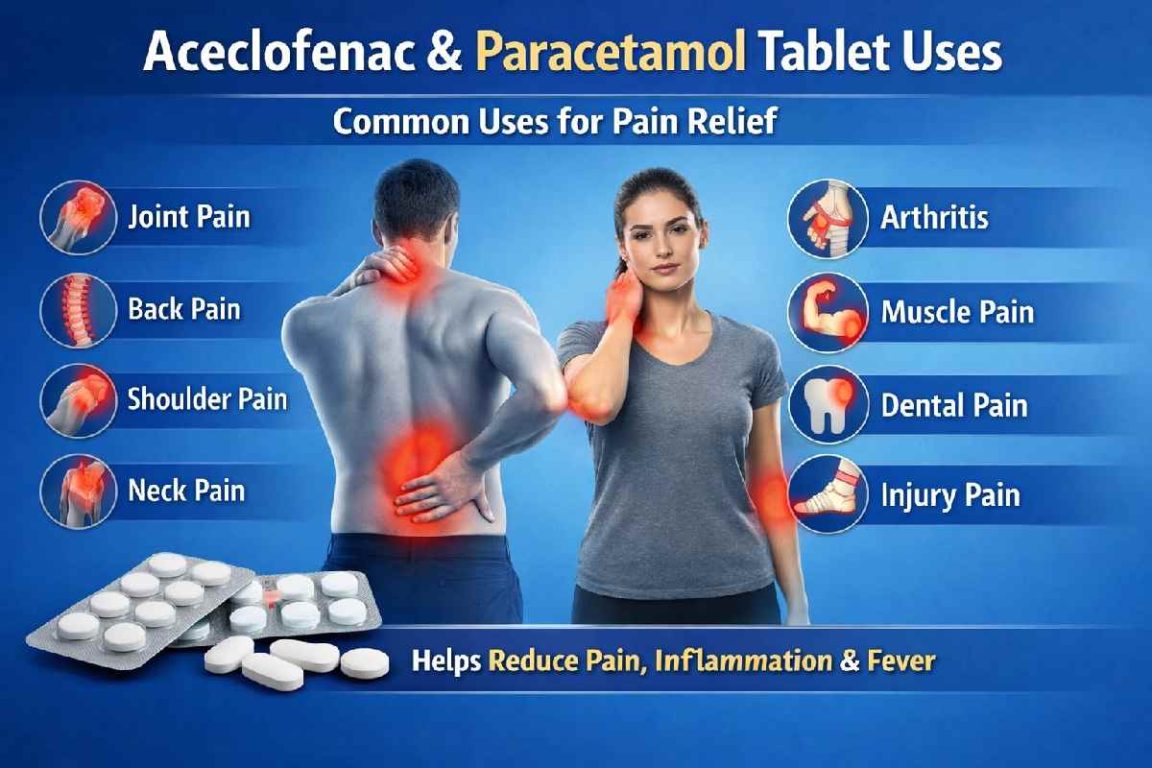
If you’ve been prescribed this medicine or seen it in a pharmacy, you may be wondering about aceclofenac and paracetamol tablet uses and when it is actually helpful.
In simple terms, this combination is used to relieve pain and reduce inflammation, while also helping lower fever when needed. It is commonly given for conditions like joint pain, muscle pain, back pain, arthritis, dental pain, and injury-related pain.
But like many pain-relief medicines, it is not something to take casually or too often. Knowing what it treats, how it works, who should avoid it, and what side effects to watch for can help you use it more safely.
What Is Aceclofenac and Paracetamol Tablet?
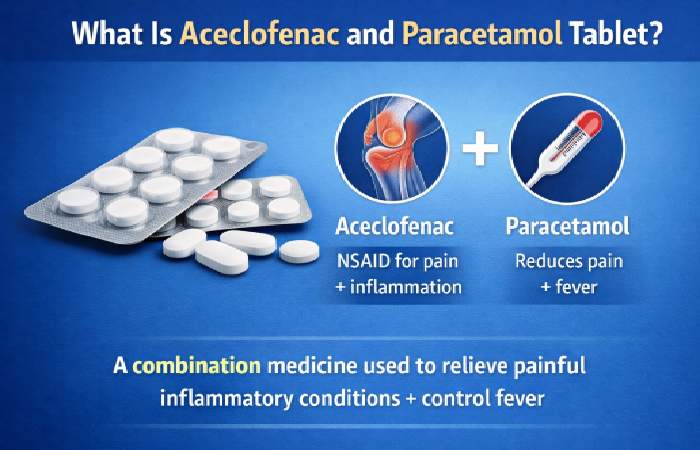
An aceclofenac and paracetamol tablet is a combination pain-relief medicine.
It contains:
- Aceclofenac – a non-steroidal anti-inflammatory drug (NSAID) that helps reduce pain, swelling, and inflammation
- Paracetamol – a widely used medicine that helps reduce pain and fever
Quick definition
Aceclofenac and paracetamol tablets are used to treat painful inflammatory conditions where both pain relief and inflammation control are needed.
This combination is commonly prescribed because some types of pain — especially joint, muscle, or injury pain — are not just about pain signals. They also involve inflammation, stiffness, and swelling.
Aceclofenac and Paracetamol Tablet Uses
The main aceclofenac and paracetamol tablet uses include relief from moderate pain, swelling, stiffness, and fever-related discomfort.
Common uses include:
- Joint pain
- Knee pain
- Back pain
- Neck pain
- Muscle pain
- Shoulder pain
- Dental pain
- Tooth extraction pain
- Arthritis pain
- Sprain or strain pain
- Post-surgery pain
- Body ache with inflammation
- Pain after injury
When Doctors Commonly Prescribe It
This medicine is often used in everyday clinical practice for pain that involves inflammation, not just simple discomfort.
1) Arthritis and Joint Pain
It may be prescribed for:
- Osteoarthritis
- Rheumatoid arthritis
- Spondylitis-related pain
- Joint stiffness and swelling
People with arthritis often have pain plus inflammation, which is why this combination may be preferred over paracetamol alone.
2) Muscle and Back Pain
It is commonly used for:
- Lower back pain
- Muscle strain
- Neck stiffness
- Sports-related pain
- Shoulder discomfort
3) Dental Pain
Dentists may recommend it after:
- Tooth extraction
- Root canal treatment
- Gum inflammation
- Severe tooth pain
4) Injury and Swelling
It may also be used for:
- Minor sprains
- Soft tissue injury
- Swelling after physical strain
- Pain after falls or overuse
How Does Aceclofenac and Paracetamol Work?
This medicine works in two different ways, which is why it can be effective for painful conditions.
Aceclofenac
Aceclofenac helps block chemicals in the body called prostaglandins, which are involved in:
- Pain
- Swelling
- Inflammation
- Stiffness
Paracetamol
Paracetamol mainly helps with:
- Pain relief
- Fever reduction
Why the combination is used
Together, they can help with:
- Faster symptom relief
- Better comfort in inflammatory pain
- Reduced stiffness in some conditions
This is especially useful when pain is caused by swelling or inflammation, not just temporary discomfort.
Who This Tablet Is Usually For
This medicine is generally used for adults who have short-term painful inflammatory conditions or certain chronic pain flare-ups under medical supervision.
It may be suitable for:
- Adults with joint pain
- People with muscle or back pain
- Patients recovering from minor dental or orthopedic procedures
- Those with painful swelling after injury
Who Should Avoid It or Be Extra Careful
This is one of the most important parts of understanding aceclofenac and paracetamol tablet uses — because it is not safe for everyone.
Use caution or avoid it if you have:
- Stomach ulcer
- Acid-related bleeding history
- Liver disease
- Kidney disease
- Heart disease
- High blood pressure
- Asthma triggered by painkillers
- NSAID allergy
- Severe dehydration
- Regular alcohol use
Also be careful if you are:
- Pregnant
- Breastfeeding
- Elderly
- Taking multiple medicines already
If you fall into any of these groups, it’s best not to self-medicate with this tablet.
How to Take Aceclofenac and Paracetamol Tablet
Always follow the exact dosage and timing given by your doctor or pharmacist.
General usage tips:
- Take it after food, unless advised otherwise
- Swallow with water
- Do not crush or double-dose
- Avoid taking it on an empty stomach if it causes acidity or discomfort
Important
Do not take more than prescribed, especially because paracetamol overdose can seriously harm the liver.
Also, avoid combining it with:
- Other NSAIDs
- Extra paracetamol
- Certain cold/flu medicines
- Some prescription painkillers
A lot of people accidentally double up on paracetamol because it is present in many common medicines.
Benefits of Aceclofenac and Paracetamol Tablet
This combination can be useful when chosen appropriately.
Potential benefits
- Helps relieve pain and inflammation together
- May reduce swelling and stiffness
- Useful in musculoskeletal pain
- Often effective for short-term acute pain
- Can improve mobility and daily comfort
For example, someone with knee inflammation or back strain may feel more relief with this combination than with fever medicine alone.
Possible Side Effects
Like all medicines, it can cause side effects — though not everyone gets them.
Common side effects
- Stomach pain
- Acidity
- Nausea
- Indigestion
- Bloating
- Dizziness
- Mild weakness
Less common but important side effects
- Vomiting
- Black stools
- Severe stomach pain
- Swelling in legs
- Reduced urination
- Skin rash
- Yellowing of eyes or skin
- Unusual tiredness
Seek urgent medical help if you notice:
- Blood in vomit or stool
- Breathing difficulty
- Severe allergic reaction
- Chest pain
- Fainting
- Signs of liver trouble
These symptoms should not be ignored.
Aceclofenac and Paracetamol Tablet Uses for Fever: Is It Common?
Technically, yes — because paracetamol lowers fever.
But in most cases, this medicine is not the first choice for simple fever alone.
Why?
Because aceclofenac is an anti-inflammatory painkiller, this combination is usually more appropriate when there is:
- Fever with body pain
- Fever with inflammation
- Painful infection-related discomfort (only if prescribed)
For ordinary viral fever, many people may not need such a combination unless a doctor specifically recommends it.
Common Mistakes People Make
A big reason people run into trouble with pain medicines is incorrect self-use.
Mistakes to avoid
- Taking it for too many days continuously
- Taking it without food
- Mixing it with other painkillers
- Using it for simple headache or mild fever too often
- Ignoring signs of gastric irritation
- Taking it despite known ulcer or kidney issues
- Using someone else’s prescription
These mistakes can increase the risk of stomach, liver, or kidney complications.
Myths vs Facts
Myth 1: “It’s just a normal painkiller, so it’s always safe.”
Fact: It may be common, but it still needs careful use, especially if taken repeatedly.
Myth 2: “If one tablet helps, two will work faster.”
Fact: Taking extra can increase the risk of side effects and overdose, especially from paracetamol.
Myth 3: “It can be taken daily for any pain.”
Fact: Long-term or frequent use should only happen under medical guidance.
Myth 4: “It’s fine with any other cold medicine.”
Fact: Many cold and flu medicines already contain paracetamol, which can lead to accidental overdose.
Aceclofenac and Paracetamol Tablet Uses in Real-Life Situations
Here are a few practical examples where this medicine may be prescribed:
Scenario 1: Knee pain after climbing stairs
A person with early joint inflammation may be given this medicine for a short period to reduce pain and stiffness.
Scenario 2: Back strain after lifting weight
If the pain involves muscle strain and inflammation, this combination may help improve movement.
Scenario 3: Tooth extraction pain
It may be prescribed for short-term pain and swelling relief after dental procedures.
Scenario 4: Arthritis flare-up
Some people with arthritis may use it during painful episodes under medical advice.
When Should You See a Doctor Instead of Self-Medicating?
You should not rely on painkillers alone if the pain keeps returning.
See a doctor if:
- Pain lasts more than a few days
- You have repeated swelling
- You need pain tablets often
- Fever keeps coming back
- Pain is severe or worsening
- You have numbness, weakness, or chest symptoms
- You have stomach pain or black stools after taking it
Pain is sometimes a symptom, not the real problem. Treating the cause matters more than repeatedly masking it.
Quick Comparison Table
| Feature | Aceclofenac | Paracetamol | Combination Tablet |
|---|---|---|---|
| Helps with pain | Yes | Yes | Yes |
| Helps with inflammation | Yes | Minimal | Yes |
| Helps with fever | Limited role | Yes | Yes |
| Common use | Joint/muscle pain | Fever, mild pain | Pain with inflammation |
| Stomach irritation risk | Higher | Lower | Moderate |
This is why the combination is often chosen for pain with swelling or stiffness, rather than for simple fever alone.
Safety Tips Before Taking This Tablet
Before using this medicine, keep these simple precautions in mind:
Do
- Take it only when needed and prescribed
- Inform your doctor about other medicines
- Drink enough water
- Watch for stomach discomfort
- Stop and seek help if side effects appear
Don’t
- Mix with alcohol
- Use it for long periods without advice
- Take multiple painkillers together
- Ignore warning signs like vomiting, bleeding, or swelling
FAQs
What are aceclofenac and paracetamol tablet uses?
Aceclofenac and paracetamol tablets are mainly used to treat pain, inflammation, stiffness, and sometimes fever-related discomfort, especially in conditions like joint pain, back pain, and muscle pain.
Can aceclofenac and paracetamol tablet be used for body pain?
Yes, it is often used for body pain, especially when the pain involves muscle soreness, inflammation, or stiffness.
Is aceclofenac and paracetamol tablet good for fever?
It may help with fever because it contains paracetamol, but it is usually not the first choice for simple fever alone unless prescribed.
Can I take aceclofenac and paracetamol tablet daily?
It should not be taken daily for long periods unless a doctor has specifically advised it.
Should I take aceclofenac and paracetamol tablet after food?
Yes, it is generally better to take it after food to reduce the chance of stomach irritation.
What are the common side effects of aceclofenac and paracetamol tablet?
Common side effects may include acidity, stomach pain, nausea, bloating, or dizziness.
Can I take this tablet with another paracetamol tablet?
Usually no, unless a doctor tells you to, because this can increase the risk of paracetamol overdose.
Who should avoid aceclofenac and paracetamol tablet?
People with stomach ulcers, liver disease, kidney disease, heart conditions, or painkiller allergy should avoid or use it only with medical advice.
Conclusion
Understanding aceclofenac and paracetamol tablet uses can help you make safer decisions when dealing with pain, swelling, stiffness, or fever-related discomfort. This combination can be useful for conditions like joint pain, back pain, muscle pain, dental pain, and arthritis flare-ups, but it should always be used carefully and in the right situation.
If your pain keeps returning, gets worse, or you find yourself needing tablets frequently, the next best step is to speak with a qualified doctor and identify the actual cause instead of only masking symptoms.