
Introduction
Sourdough discard isn’t a mistake or waste—it’s a controllable ingredient. When you match discard age and hydration to the right recipe type, results become consistent instead of random.
If you bake sourdough, you’ve faced the same problem: jars of discard piling up in the fridge and a vague sense that you should be using it. Most advice says, “Just make pancakes or crackers.” That works—sometimes. But other times you get gummy centers, overly sour muffins, or crackers that taste sharp instead of savory.
Here’s the solution: stop treating discard like a generic leftover. Treat it like pre-fermented flour with a personality.
Key Takeaways
-
Discard age changes flavor, acidity, and structure
-
Fresh discard can help texture; old discard should only add flavor
-
Savory recipes are more forgiving than sweet ones
-
Chemical leavening is essential in most discard baking
-
A framework beats endless recipe scrolling
What Is Sourdough Discard (Really)?
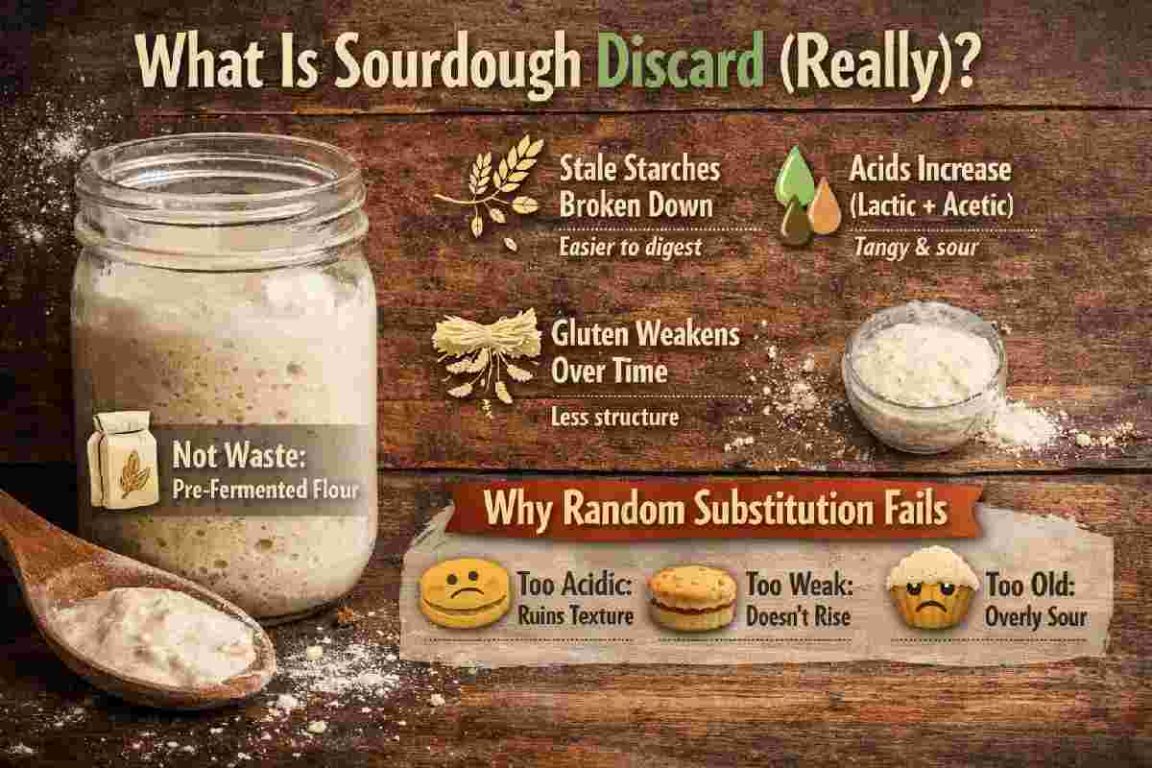
Sourdough discard is the portion of starter removed during feedings to keep the culture balanced. Functionally, it’s flour and water that have already undergone partial fermentation.
That matters because fermentation:
-
Breaks down starches
-
Produces acid (lactic and acetic)
-
Weakens gluten over time
Discard is not neutral flour. And that’s why random substitution fails.
Sourdough Discard Use-Case Decision Table
| Discard Age | Flavor Profile | Leavening Power | Best Recipe Types | Recipes to Avoid |
| 0–12 hours (fresh) | Mild, slightly tangy | Low but usable | Pancakes, waffles, muffins, quick breads | Crackers needing long bake |
| 12–48 hours (mature) | Tangy, complex | Very low | Crackers, flatbreads, savory crepes | Sweet cakes, sandwich bread |
| 3–7 days (old, refrigerated) | Sharp, acidic | None | Flavoring batters, dredges, savory doughs | Any rise-dependent baking |
The Discard Decision Framework
Before choosing a recipe, classify your discard:
Fresh discard (0–12 hours after feeding)
-
Mild flavor
-
Slight leavening potential
-
Best for pancakes, waffles, soft batters
Mature discard (12–48 hours)
-
Tangy, active acids
-
Minimal lift
-
Ideal for crackers, flatbreads, savory bakes
Old discard (3–7 days, refrigerated)
-
Strong acidity
-
No leavening
-
Use only for flavor enhancement, not structure
Quick Breakfasts (Pancakes & Waffles)
-
Use fresh discard
-
Always add baking soda or powder
-
Expect tenderness, not rise
Common failure: gummy centers from too much acid + weak gluten.
Savory & Meal Recipes
-
Flatbreads, crackers, scallion pancakes
-
Mature discard works best
-
Acid improves flavor complexity
Savory recipes tolerate sourness far better than sweet ones.
Baking & Sweets
-
Cookies, brownies, muffins
-
Balance acid with sugar and fat
-
Do not expect discard to replace yeast
Zero-Waste Cooking Uses
-
Batter for vegetables or fish
-
Thickener for soups and stews
-
Flavor boost in savory crepes
What Not to Make With Discard (And Why)
Avoid:
-
Lean bread loaves
-
Long-fermented doughs without added yeast
Discard lacks the structural strength for proper oven spring.
Storage, Safety, and Flavor Control
-
Refrigerate discard up to 7 days
-
Freeze for long-term storage
-
Clear hooch is normal; fuzzy mold is not
For food safety standards, guidance from organizations like the USDA and FDA supports refrigeration of fermented batters when properly sealed.
Ingredient Quality & Regional Notes
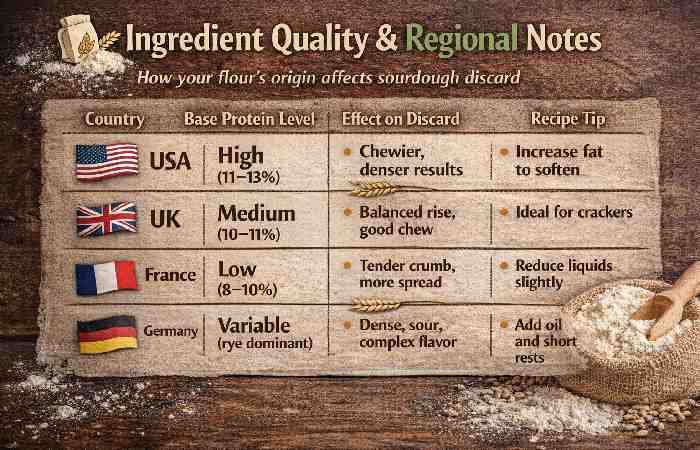
Protein content varies by region:
-
US flours trend higher protein
-
EU flours are often softer
This affects discard thickness and absorption.
Country & Brand Comparison Table (Flour Used in Discard Recipes)
| Country | Brand | Protein Level | Typical Price Range | Specialist Notes |
|---|---|---|---|---|
| USA | King Arthur Baking | High | $$ | Consistent for discard pancakes |
| USA | Bob’s Red Mill | Medium | $$ | Whole-grain friendly |
| UK | Shipton Mill | Medium | $$$ | Great for crackers |
| France | Francine | Lower | $$ | Softer texture, less chew |
| India | 24 Mantra Organic | Varies | $ | Good for flatbreads |
FAQs
Is sourdough discard healthy to eat?
Yes, when stored properly. It’s fermented flour with mild acidity, not spoiled food.
How long can I keep sourdough discard in the fridge?
Up to 7 days in a sealed container. Freeze for longer storage.
Can sourdough discard replace yeast?
No. Discard adds flavor, not reliable leavening.
Why are my discard pancakes gummy?
Usually excess acid or too much discard relative to flour.
Can I use whole-wheat discard the same way?
Yes, but expect denser textures and stronger flavor.
Is sourdough discard safe for kids?
Yes, once cooked. Alcohol content is negligible after cooking.
What’s the best discard recipe for beginners?
Crackers or flatbreads—they’re forgiving and consistent.
Can I mix discard from different days?
Yes, but flavor becomes less predictable.
Why do sweet discard recipes taste too sour?
Acid and sugar imbalance. Use fresher discard or add fat.
Does discard behave differently in hot climates?
Yes. Fermentation accelerates, so discard ages faster.