
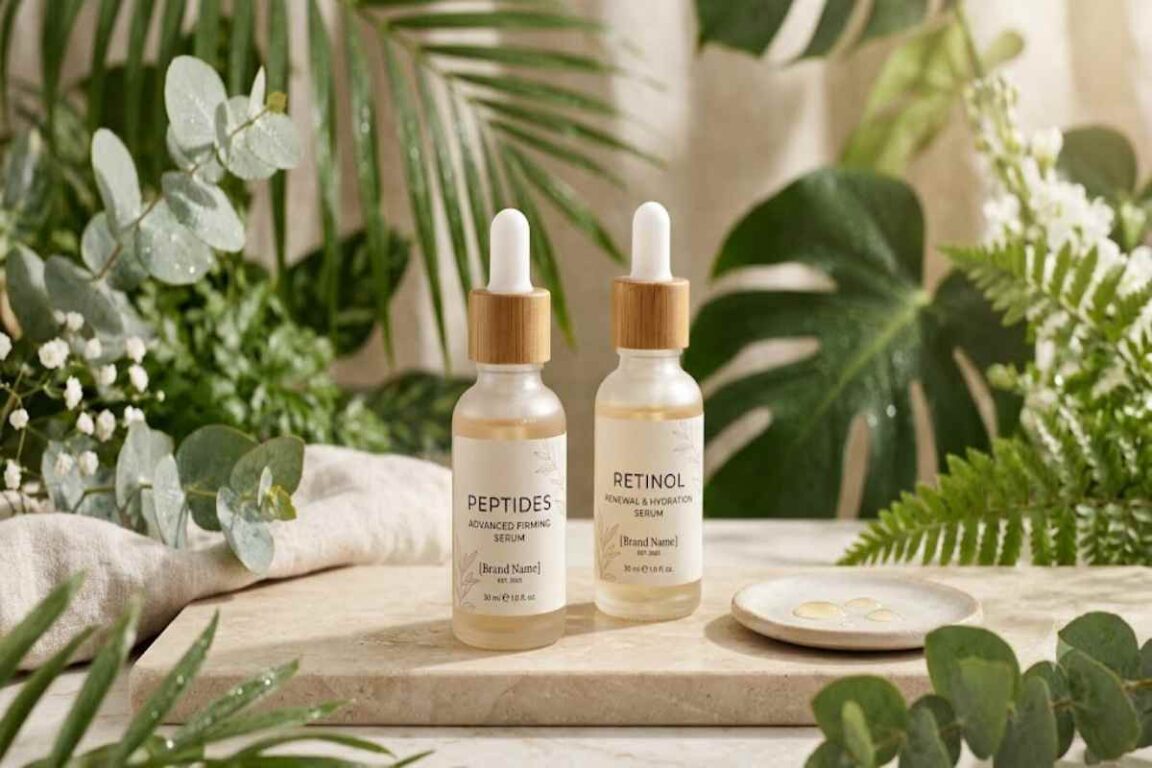
Skincare efforts can be discouraging when your regimen to clear up your skin have you waking up a little worse off than when you went to sleep. You begin motivated, do the same daily routine, hope for the best, and then are stuck with one more thing to keep up with each day. Occasionally, the solution isn’t a more powerful product, but a less aggressive one. That where well-researched peptides becomes crucial.
What Are the Advantages of Using Peptides for Collagen?
In this case, for people familiar with skincare products, the debate may turn to: What is the difference between peptides and retinol for collagen support?
Retinol is a known staple in skin products. It can diminish the visibility of lines, even out skin tone and minimize the signs of sun damage. And while most skin will tolerate retinol to a certain degree, it can often cause dryness, redness, peeling and irritation – especially if it’s used at a high concentration or if it’s added into your routine before your skin has a chance to adapt. A bit of your skin may need some time to adjust, but if the irritation persists, it’s time to reconsider.
Now, this is where peptides come in. These short chains of amino acids have the ability to function as bio-messengers. That means these are just relay systems and signal amplifiers, rather than aggressive agents like in retinol. Practically, that means peptides can be a good alternative to sensitive skin.
Some topical forms of peptides are under investigation for their role in collagen function. Copper peptides, such as GHK-Cu, are also of interest for their potential skin-repair properties.
However, it’s crucial to consider where to buy peptides in Canada for a collagen-driven skincare product without the usual irritation and exfoliating qualities of retinoids. A decently formulated peptide moisturizer is worth a try if you do not get on with retinol and you need to plump and tighten your skin (peptides, of course, are also suitable for those with rosacea or extremely sensitive skin).
In What Situations Should You Consider Peptides Instead of Retinol?
Imagine prepping for a special night out with your usual retinol face painfully tight and flushed. Maybe you’ve switched up your medication or the weather has changed leaving your skin not as flawless, the no-pleasance is simply not worth it.
A calming, fragrance free moisturizer with peptides could help out some sensitive-skin routines, but any ingredients may be the culprit.
Pregnancy is always a significant period. Usually, topical retinoids should be stopped in pregnancy. If you’re pregnant or breastfeeding and want to try new actives, get medical advice before trying as it doesn’t mean they’re safe during pregnancy and breastfeeding.
But for those younger wanting to stall the disintegration, it begins with every day broad spectrum sun protection-read: sunscreen-and a good moisturizer. You can add peptides, but they can’t replace.
Can Peptides Support Collagen Without Leaving Your Skin Dry and Tight?
If after cleansing your skin feels tight or if it flakes when you put an active product on, perhaps you need to introduce peptides into your routine. For the time being, ask yourself whether your routine is really damaging your skin barrier.
A peptide formulation can be a good option for boosting collagen without the harsh exfoliating challenges of most retinoids. However, peptides are not a standalone actors. Hence, to make your routine more comfortable:
- Select the right moisturizer for your skin type.
- Introduce any new product one at a time.
- Use a gentle cleanser and broad-spectrum sunscreen.
- Follow up on products that continue to cause irritation. Get professional advice, if necessary.
The end goal of using peptides as an alternative is to achieve a relaxed skin that is supported, not the heaviest sensation of an active ingredient.
Peptides Work Slowly To Help Support Skin Strength
Peptide skincare is better thought of as a long-term, strategic addition rather than an instant solution. As some peptides are being researched for their involvement in collagen related mechanisms, their visible benefits may also depend on the specific peptides and your skin concern.
If your skin is not looking better after switching serums over and over again because one product didn’t work for your face, allow the right routine to have time to prove to you that it works. Set realistic expectations and do not read too much on all of the label claims.
Thoughtful combination of ongoing self-care, proper miniaturization and sun protection may be the sensible place to start until clinical research advances the field of peptide skincare.
Why The No Peptides Phase-In Period Is Important
Retinol typically can’t be added all at once since it causes some redness and irritation. Peptide products usually don’t involve quite as much retinization and may be easier to add in your routine. But peptides aren’t totally irritation-free and you need to be aware of the instructions on the product.
That ease could be motivating. Clear ingredient lists and packaging and labelling that meets quality standards can help, but don’t assume you can throw something on your skin without considerations.
The benefit in practice: potentially an easier routine – not necessarily instant results or non-irritating.
In essence, the better you understand your skin, the easier the direction to your ideal skin care ingredient. However, for most people, peptides may be more compatible with their routine but no formula warrants allegiance just for being more gentle. Let results, research and fair expectations be your guide.