
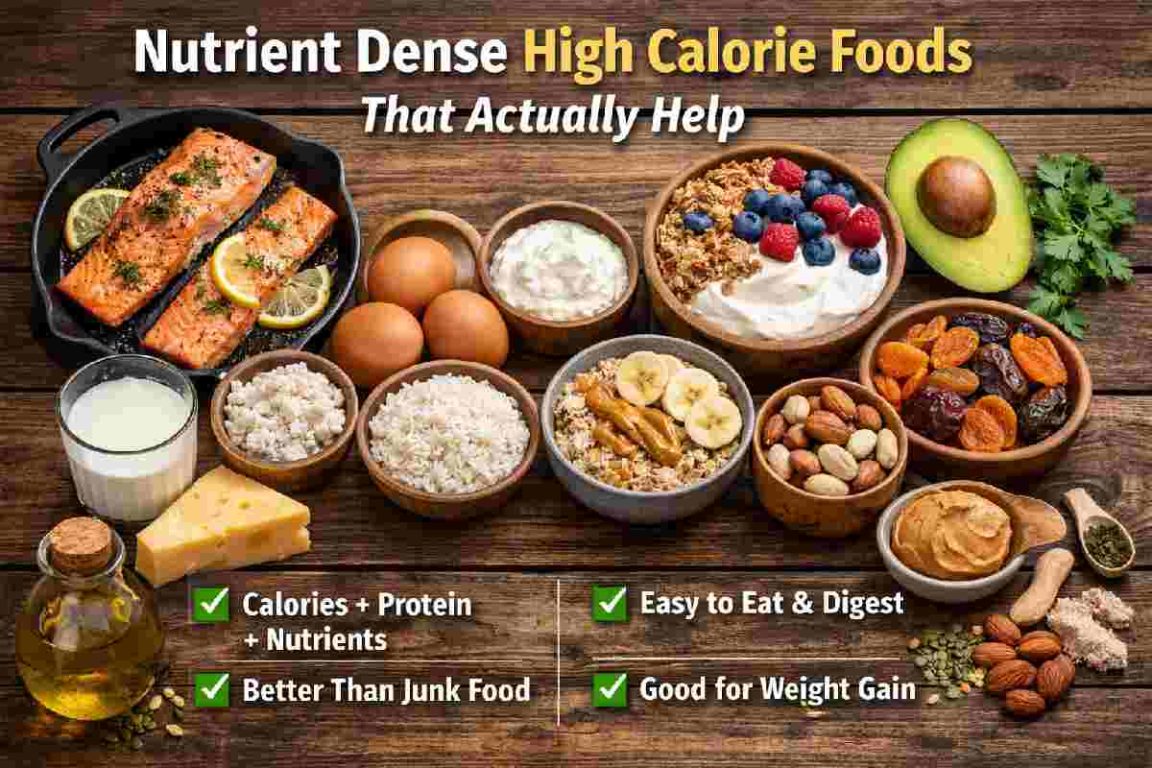
The best nutrient dense high calorie foods are the ones that give you meaningful calories plus protein, healthy fats, fiber, vitamins, and minerals—not just extra energy. If you want to eat more without relying on junk, the smartest move is to build meals around foods that are easy to eat, easy to combine, and worth the calories.
A lot of people searching for nutrient dense high calorie foods are dealing with the same problem: they need to eat more, but they do not want to feel like they are force-feeding themselves random junk. That is where most advice online falls apart. It tells you to “just eat more calories,” but does not explain which calories are actually useful.
Here is the direct answer: the best nutrient dense high calorie foods are foods that help you increase calories without sacrificing protein, micronutrients, digestion, or meal quality. Think eggs, salmon, Greek yogurt, avocado, nuts, seeds, olive oil, oats, rice, potatoes, and calorie-smart smoothies—not just donuts and chips.
If your goal is healthy weight gain, muscle gain, better recovery, or simply eating enough, this guide will help you choose foods that make the process easier and more sustainable.
Key Takeaways
- Not all high calorie foods are nutrient dense. Some are just easy calories.
- The best options combine calories + protein + micronutrients + digestibility.
- Foods like eggs, salmon, Greek yogurt, nuts, seeds, avocado, oats, rice, potatoes, and olive oil usually beat “dirty bulk” foods long term.
- If you struggle to eat enough, liquid calories and calorie boosters often work better than forcing giant meals.
- The easiest way to eat more is to layer calories into foods you already tolerate well.
- A good high-calorie diet should still include protein, produce, fiber, and variety.
What Does “Nutrient Dense High Calorie Foods” Actually Mean?
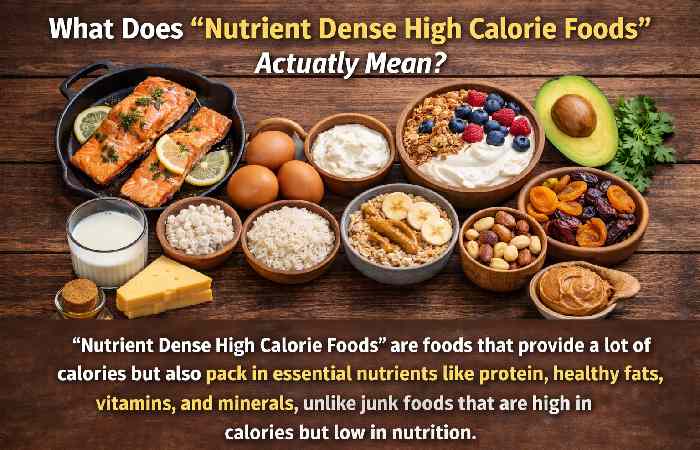
Calorie dense vs nutrient dense
These two terms get mashed together online, but they are not the same thing.
- Calorie dense = a food gives you a lot of calories in a small amount
- Nutrient dense = a food gives you a lot of nutritional value for what you eat
Some foods do both. Some only do one.
Example:
- Olive oil is very calorie dense, but it is not a complete nutrient powerhouse by itself.
- Salmon is calorie dense and nutrient dense because it also brings protein, omega-3 fats, selenium, vitamin D, and B vitamins.
- Soda gives calories, but almost no meaningful nutrition.
That difference matters.
If you are trying to eat more, you do not just need “more food.” You need foods that help your body with:
- energy
- muscle repair
- recovery
- hormones
- satiety
- overall nutrition
Why this matters for healthy weight gain
If you build your diet around random high-calorie foods, a few things usually happen:
- You feel sluggish
- You miss protein targets
- You get full from foods that are not helping much
- You end up relying on convenience instead of quality
That is why the best nutrient dense high calorie foods are not always the highest-calorie foods on paper. They are the ones that give you the best return per bite.
The Best Nutrient Dense High Calorie Foods
Below is the shortlist that actually matters in real life.
High-calorie protein foods
These are the foods that help you eat more without forgetting muscle support and recovery.
1) Eggs
Eggs are one of the easiest “worth the calories” foods.
Why they work:
- solid protein
- healthy fats
- choline
- easy to pair with toast, rice, wraps, potatoes, or cheese
Best for:
- breakfast
- sandwiches
- quick calorie upgrades
2) Salmon
Salmon is one of the best examples of a true nutrient dense high calorie food.
Why it works:
- high-quality protein
- omega-3 fats
- vitamin D
- selenium
- satisfying without being “empty”
Best for:
- lunch and dinner bowls
- pasta
- rice plates
3) Greek yogurt (full-fat)
This is one of the easiest foods for people who want protein + calories without heavy cooking.
Why it works:
- protein-rich
- easy to digest for many people
- easy to combine with fruit, honey, oats, granola, seeds, and nut butter
Best for:
- breakfast
- snacks
- before bed
4) Paneer or full-fat cottage-style dairy options
Great for vegetarian eaters or anyone needing easy protein calories.
Why it works:
- calorie dense
- protein rich
- flexible in both savory and sweet meals
Best for:
- wraps
- bowls
- stir-fries
- snacks
5) Chicken thighs or fattier cuts of meat
Leaner proteins are useful, but if you are trying to increase calories, slightly fattier cuts often make life easier.
Best for:
- meal prep
- rice bowls
- wraps
- batch cooking
Healthy fat foods that make eating easier
If your appetite is low, this category matters a lot.
6) Avocado
Avocado is one of the easiest whole-food ways to add calories without much food volume.
Why it works:
- healthy fats
- fiber
- potassium
- easy texture for toast, bowls, wraps, and smoothies
7) Nuts
Almonds, walnuts, cashews, pistachios, and peanuts are some of the most practical calorie boosters available.
Why they work:
- easy to snack on
- portable
- calorie dense
- provide minerals and healthy fats
Best use:
- snacks
- yogurt bowls
- oatmeal
- trail mix
8) Nut butters
Peanut butter and almond butter are high-calorie MVPs because they are easy to add without changing your meal too much.
Use them in:
- smoothies
- toast
- oats
- yogurt
- bananas
- sandwiches
9) Seeds
Chia, flax, pumpkin, sesame, and sunflower seeds can quietly increase calories and nutrients.
Why they matter:
- healthy fats
- minerals
- easy add-in food
10) Olive oil
Olive oil is not glamorous, but it is one of the most effective ways to increase calories without adding much food volume.
Use it on:
- rice
- pasta
- vegetables
- potatoes
- salads
- roasted meals
This is one of the smartest answers for people who say, “I cannot eat bigger meals.”
Smart carb sources with staying power
Carbs are not the villain here. If you need more calories, they often make eating enough much easier.
11) Oats
Oats are cheap, flexible, and easy to upgrade.
Why they work:
- easy breakfast base
- pair well with milk, yogurt, nuts, seeds, fruit, honey, and nut butter
- can be made as overnight oats, porridge, or smoothies
12) Rice
Rice is one of the best foods for high calorie meal building because it is:
- easy to digest
- easy to portion up
- easy to pair with protein and fats
13) Potatoes and sweet potatoes
These are more filling than some other carb sources, but they are still excellent when paired with fats and protein.
Best combo:
- potato + olive oil + protein + cheese or yogurt sauce
14) Granola
A practical food, especially for people who need calories quickly.
Best use:
- topping, not always a standalone “health food”
It works well in:
- yogurt bowls
- smoothie bowls
- snack packs
15) Dried fruit
Dried mango, dates, raisins, apricots, and figs can be useful because they are more calorie concentrated than fresh fruit.
Best use:
- trail mix
- snacks
- smoothies
- oatmeal
Best “combo foods” That Work in Real Life
This is where people usually succeed or fail.
You do not gain calories from “perfect foods.” You gain calories from foods you will actually keep eating.
Best combo foods include:
- Trail mix = nuts + seeds + dried fruit
- Smoothies = milk/yogurt + banana + oats + nut butter
- Greek yogurt bowls = yogurt + granola + fruit + seeds
- Rice bowls = rice + salmon/chicken/paneer + avocado + sauce
- Sandwiches = bread + protein + cheese + avocado + spreads
- Oatmeal bowls = oats + milk + nut butter + banana + seeds
These meals are better than random snacking because they stack:
- calories
- protein
- fiber
- convenience
Best Foods by Goal
Not everyone searching for nutrient dense high calorie foods needs the same thing.
Best for healthy weight gain
If your goal is to gain weight without feeling awful, focus on:
- eggs
- full-fat yogurt
- salmon
- avocado
- rice
- oats
- potatoes
- nuts
- olive oil
- cheese
- smoothies
Best strategy:
- add calories around your regular meals instead of replacing everything with junk
This is where a lot of people go wrong. They hear “eat more” and jump straight to:
- fast food
- desserts
- processed snack overload
That works for calories, but not always for energy, digestion, skin, appetite, or consistency.
Best for muscle building
If your goal is muscle, your high-calorie foods should still help you hit:
- protein
- carbs for training
- total calories
Best foods:
- Greek yogurt
- eggs
- rice
- oats
- salmon
- chicken thighs
- milk
- nut butter
- potatoes
- pasta
- paneer/tofu
Best combo meals:
- rice + protein + avocado
- oats + yogurt + peanut butter
- pasta + salmon/chicken + olive oil
- smoothie + toast + eggs
Best for low appetite
This is where volume matters most.
If you get full quickly, your best foods are:
- smoothies
- milk-based shakes
- nut butters
- olive oil
- avocado
- yogurt
- cheese
- dried fruit
- trail mix
Best move:
stop trying to win with giant salads and giant bowls of vegetables if your calorie goal is already hard.
You still need produce, but your meals should not be built around foods that fill you up too fast.
Best for budget
If money matters, you do not need “superfoods.”
Best budget-friendly options:
- eggs
- peanut butter
- oats
- milk
- rice
- potatoes
- bananas
- lentils
- full-fat yogurt
- seeds when affordable
This is one of the biggest myths in nutrition content: that eating better always costs dramatically more. It can—but it does not have to.
Nutrient Dense High Calorie Foods Comparison Table
Here is a practical comparison table you can actually use.
| Food | Calorie Density | Protein | Nutrient Value | Satiety | Best For |
|---|---|---|---|---|---|
| Eggs | Medium-High | High | High | Medium | Balanced meals |
| Salmon | High | High | Very High | Medium | Healthy weight gain + muscle |
| Greek yogurt (full-fat) | Medium-High | High | High | Medium | Snacks, breakfast, recovery |
| Avocado | High | Low | High | Medium | Meal add-ons |
| Peanut butter | Very High | Medium | Medium-High | Medium | Easy calorie boosting |
| Mixed nuts | Very High | Medium | High | Medium | Portable snacks |
| Olive oil | Very High | Low | Medium | Low | Adding calories without bulk |
| Oats | Medium | Medium | High | High | Breakfast, smoothies |
| Rice | Medium | Low | Moderate | Medium | Easy meal base |
| Potatoes | Medium | Low | Good | High | Balanced meal carbs |
| Paneer | High | High | High | Medium | Vegetarian high-calorie meals |
| Dried fruit | High | Low | Moderate | Low-Medium | Quick energy and snack combos |
Best picks if you want the most “value per calorie”
If I had to narrow this down to the strongest overall picks, I would start with:
- eggs
- salmon
- Greek yogurt
- oats
- nuts
- nut butter
- avocado
- olive oil
- rice
- paneer
That is a stronger base than trying to “bulk” off cereal, chips, and protein bars alone.
Best High-Calorie Meal Ideas
This is where theory becomes useful.
Breakfast ideas
- Oats made with milk + peanut butter + banana + chia
- Greek yogurt bowl with granola, berries, honey, and walnuts
- Eggs on toast with avocado and cheese
- Smoothie with milk, yogurt, oats, banana, and nut butter
Lunch and dinner ideas
- Rice bowl with salmon, avocado, vegetables, and olive oil dressing
- Chicken thigh rice plate with yogurt sauce
- Paneer wrap with cheese and avocado
- Pasta with olive oil, parmesan, and protein
- Potato bowl with eggs, cheese, and sautéed vegetables
Snack ideas
- Trail mix
- Peanut butter toast
- Full-fat yogurt with granola
- Cheese and crackers
- Banana with nut butter
- Dried fruit and nuts
Before bed ideas
- Greek yogurt with honey and seeds
- Milk shake with banana and oats
- Peanut butter toast
- Paneer or cottage-style dairy snack
A lot of people who struggle to gain weight do better when they stop thinking in terms of “three huge meals” and start thinking in terms of:
- 3 meals
- 2 snacks
- 1 easy liquid calorie option
That is often far more realistic.
How to Add Calories Without Feeling Stuffed
This section matters more than the food list.
Because most people do not fail from “not knowing what to eat.”
They fail because they cannot comfortably eat enough of it.
1) Use calorie boosters
These are foods you can add to meals without changing the meal much.
Best calorie boosters:
- olive oil
- butter or ghee
- nut butter
- cheese
- seeds
- avocado
- tahini
- full-fat yogurt sauces
Example:
A plain bowl of oats is one thing.
Oats with:
- milk
- peanut butter
- banana
- seeds
- honey
…is a completely different calorie outcome.
2) Choose lower-volume, higher-energy foods
If appetite is low, high-volume “clean eating” can work against you.
Foods that are often too filling for the calories:
- giant salads
- broth-heavy soups
- plain vegetables
- plain fruit-only snacks
That does not mean they are “bad.” It just means they are not efficient when you need more energy.
3) Drink some of your calories
This is one of the most underrated strategies.
A smoothie is often easier than another full meal.
Easy high-calorie smoothie formula:
- milk or yogurt
- banana
- oats
- peanut butter
- frozen fruit
- optional seeds or honey
This is especially useful for:
- busy people
- poor appetite
- post-workout intake
- anyone who feels too full too quickly
Common Mistakes People Make
If you want this article to actually help, we need to talk about what usually goes wrong.
Mistake 1: Eating “healthy” but accidentally too low calorie
This is incredibly common.
People eat:
- salads
- grilled chicken
- fruit
- plain oats
- vegetables
…then wonder why they are not gaining or maintaining weight.
The issue is not that these foods are bad.
The issue is that they are often not enough on their own.
Mistake 2: Going too hard on junk food
The opposite mistake is trying to fix calorie intake with:
- pastries
- takeout
- sugary snacks
- processed convenience foods all day
This can work short term, but many people end up with:
- energy crashes
- poor digestion
- inconsistent appetite
- worse meal quality overall
Mistake 3: Ignoring protein
If your calories go up but your protein stays low, you are not setting yourself up well for:
- muscle retention
- training recovery
- balanced meals
Mistake 4: Eating too much fiber too fast
This one gets ignored a lot.
If you suddenly add:
- oats
- seeds
- dried fruit
- nuts
- legumes
…all at once, your stomach may protest.
Increase smart foods gradually.
Mistake 5: Relying on “perfect eating”
You do not need perfect.
You need repeatable.
The best high-calorie strategy is the one you can do on:
- busy days
- low-energy days
- normal weeks
Are These Foods Right for Everyone?
Mostly, yes—but not always in the same way.
You may need extra care if you have:
- diabetes or insulin resistance
High-calorie foods can still fit, but pair carbs with protein and fats more intentionally. - digestive issues
Some foods like nuts, dairy, seeds, or high-fat meals may need adjustment. - food allergies
Nut butters, dairy, and certain seeds may need swaps. - kidney or medical nutrition concerns
Protein and mineral-heavy foods may need to be discussed with a clinician.
This article is not a medical plan. It is a practical nutrition guide.
For evidence-based baseline nutrition advice, it is smart to cross-check with trusted sources like:
- USDA MyPlate
- NHS
- Academy of Nutrition and Dietetics
- Harvard T.H. Chan School of Public Health
That matters even more if you are dealing with a medical condition, disordered eating history, or recovery nutrition.
Final Verdict
The best nutrient dense high calorie foods are not just the foods with the biggest calorie number. They are the foods that help you eat more efficiently while still supporting your body well.
If you want the shortest version of this article, here it is:
Build your diet around:
- protein-rich foods
- smart carb bases
- healthy fats
- easy add-ons
- calorie-efficient snacks
Start with these first:
- eggs
- salmon
- Greek yogurt
- oats
- rice
- potatoes
- avocado
- nuts
- nut butter
- olive oil
- paneer
That is usually a better long-term strategy than trying to survive on “bulk food” that is technically high calorie but nutritionally weak.
If you are trying to gain weight, build muscle, or simply eat enough without feeling miserable, these are the nutrient dense high calorie foods worth keeping in rotation.
FAQs
1) What are nutrient dense high calorie foods?
Nutrient dense high calorie foods are foods that provide a lot of calories plus meaningful nutrition. Good examples include salmon, eggs, nuts, avocado, Greek yogurt, oats, and olive oil.
2) What is the best nutrient dense high calorie food for weight gain?
There is not one single best food, but salmon, eggs, nut butter, Greek yogurt, oats, and rice-based meals are some of the strongest choices. They give calories while still supporting protein and overall nutrition.
3) Are high calorie foods always unhealthy?
No. A food being high calorie does not automatically make it unhealthy. The better question is whether the food also provides protein, healthy fats, fiber, vitamins, or minerals.
4) What should I eat if I need calories but get full fast?
Go for lower-volume, higher-energy foods like smoothies, nut butter, full-fat yogurt, avocado, olive oil, dried fruit, and trail mix. These are usually easier than forcing giant meals.
5) What are the best high calorie foods for muscle gain?
The best options usually combine protein and carbs, such as Greek yogurt with granola, oats with peanut butter, rice with chicken or salmon, eggs on toast, and milk-based smoothies.
6) What are the cheapest nutrient dense high calorie foods?
Budget-friendly options include eggs, peanut butter, oats, milk, rice, potatoes, bananas, lentils, and full-fat yogurt. You do not need expensive “superfoods” to eat more effectively.