
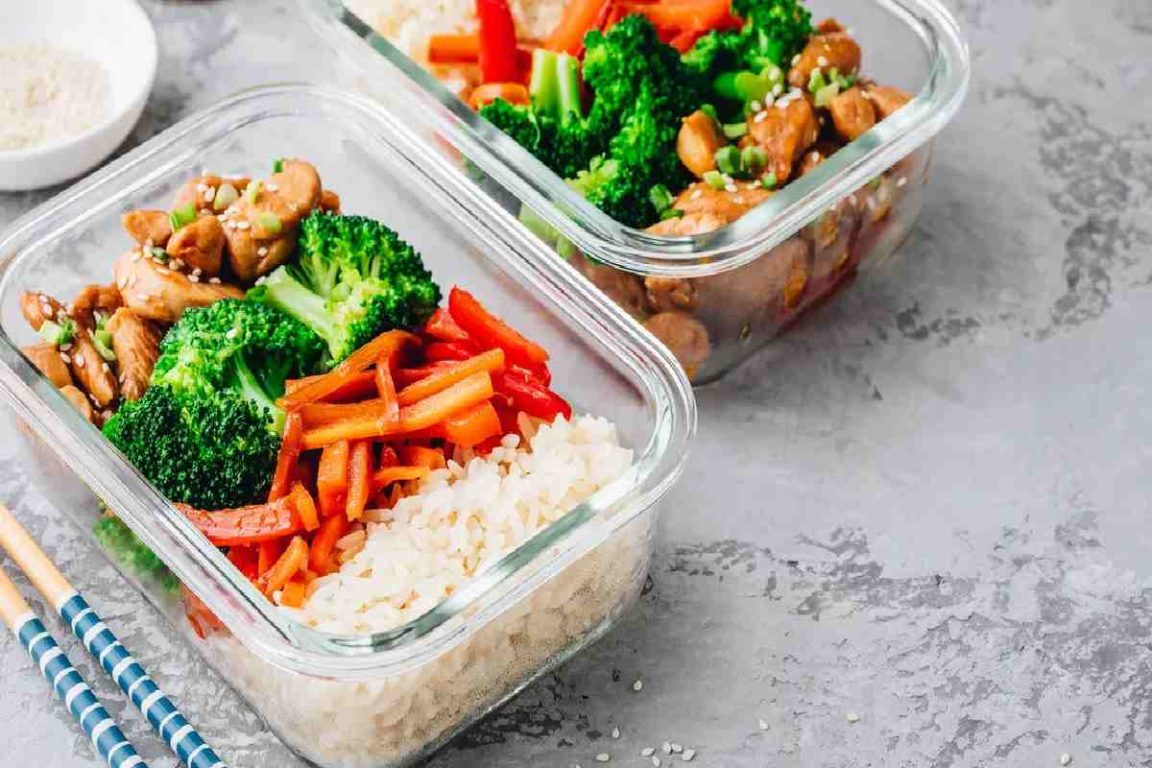
Meal prep ideas don’t fail because people are lazy—they fail because most advice is designed for perfect weeks, not real ones. The truth is simple: meal prep works when it removes decisions, not when it creates Instagram-worthy meals.
If you’ve ever prepped on Sunday and still ordered takeout by Wednesday, this guide is for you.
Key Takeaways
-
Meal prep is a system, not a recipe list
-
Fewer decisions = higher consistency
-
Modular prep beats rigid weekly menus
-
Cost and storage shape success more than willpower
-
Sustainable prep matters more than “clean” eating
Why Most Meal Prep Ideas Fail
Problem: Most guides push aggressive plans—seven meals, seven days, zero flexibility.
Agitation: By midweek, food feels repetitive, energy drops, and prep becomes a chore. Food gets wasted, guilt kicks in, and the habit dies.
Solution: Design meal prep around how humans actually eat—variable schedules, changing cravings, and limited time.
Meal prep should lower friction, not increase it.
The 3 Meal Prep Systems That Actually Work
| System | Best For | Flexibility | Burnout Risk |
|---|---|---|---|
| Full-Week Batch Cooking | Tight schedules | Low | High |
| Modular Mix-and-Match | Most people | High | Low |
| Hybrid Prep | Busy professionals | Medium | Low |
Modular prep wins long-term. You prep components—proteins, carbs, sauces—then assemble meals in minutes.
Easy Meal Prep Ideas for Beginners
Start boring. Boring sticks.
Beginner-friendly components:
-
Grilled or pan-seared chicken
-
Boiled eggs
-
Rice, quinoa, or roti
-
One roasted vegetable
-
One sauce (yogurt, hummus, salsa)
5 no-stress combinations:
-
Rice + chicken + veggies + sauce
-
Wraps with leftover protein
-
Egg bowls with toast or grains
-
Salad base + warm protein
-
Stir-fry remix from leftovers
If you’re new, prep once or twice a week, not daily perfection.
Healthy Meal Prep Ideas for Everyday Nutrition
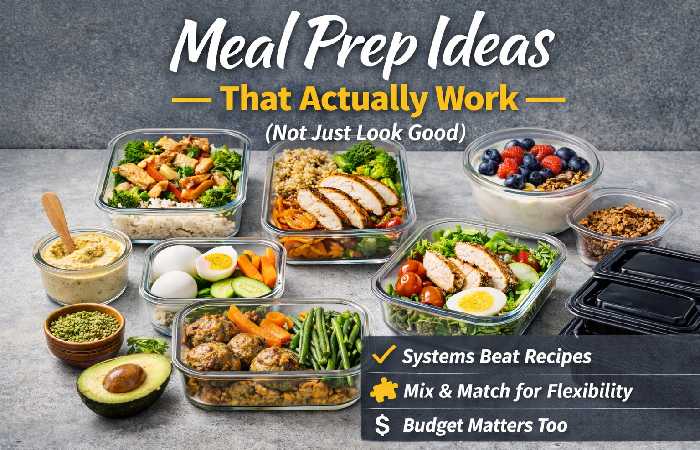
Healthy meal prep isn’t about eating “light.” It’s about eating predictably well.
A simple rule that scales globally:
-
Protein for fullness
-
Fiber for digestion
-
Fats for satisfaction
Avoid the common trap: ultra-low-calorie meal prep that triggers snacking later. Sustainable nutrition beats short-term discipline.
Quick Meal Prep Ideas for Busy Workdays
If you only have 45–60 minutes, do this:
-
Cook one protein
-
Cook one carb
-
Chop raw vegetables
-
Buy sauce instead of making it
No-cook backups:
-
Greek yogurt + fruit
-
Peanut butter sandwiches
-
Boiled eggs + toast
Meal prep doesn’t fail because it’s unhealthy—it fails because it’s too slow.
Cost & Country Comparison (Information Gain)
Average Weekly Meal Prep Cost (Illustrative)
| Country | Cost Trend | Notes |
|---|---|---|
| US | Medium-High | Protein costs dominate |
| UK | Medium | Strong supermarket options |
| India | Low | Home cooking advantage |
| Australia | High | Imported produce costs |
| Canada | Medium-High | Seasonal price swings |
Popular Meal Prep / Meal Kit Brands
| Brand | Countries | Price Range | Best For |
|---|---|---|---|
| HelloFresh | US, UK, AU | Medium-High | Convenience |
| Blue Apron | US | High | Cooking experience |
| Freshly | US | High | Zero cooking |
| Mindful Chef | UK | High | Health-focused |
| UrbanPlatter | India | Low-Medium | DIY prep support |
Meal kits help beginners—but long-term, DIY prep is cheaper and more flexible.
Storage, Tools, and Time Math
-
Glass containers last longer and reheat better
-
Freeze sauces and cooked proteins
-
Expect 60–90 minutes per prep session
If cleanup feels worse than cooking, simplify.
Who Should Not Meal Prep
Meal prep may not fit if:
-
You cook fresh daily by choice
-
You travel unpredictably
-
You hate leftovers (no shame)
In those cases, partial prep or meal kits may work better.
The Hidden Psychology Behind Successful Meal Prep
Here’s what top SERP pages never explain:
People don’t quit meal prep because of food.
They quit because of decision fatigue and taste boredom.
3 Psychology Rules That Make Meal Prep Stick
-
Repeat meals, not flavors
Same base, different sauces = zero boredom. -
Plan for your worst day, not your best
If your prep only works when motivated, it will fail. -
Always keep an “emergency meal”
A frozen or no-cook backup prevents takeout spirals.
Meal prep that accounts for human behavior beats “perfect” nutrition plans every time.
Meal Prep Ideas That Save the Most Time (Reality Check)
Not all meal prep ideas are equal. Some save hours. Others just move cooking around.
High Time-Return Prep Ideas
-
Roasting trays of vegetables (hands-off time)
-
Bulk protein cooking (chicken, beans, tofu)
-
Pre-washed greens + store-bought sauces
Low Time-Return Prep Ideas (Be Careful)
-
Overly complex recipes
-
Daily fresh chopping
-
Cooking 7 different meals for 7 days
Rule:
If prep feels harder than daily cooking, the system is wrong.
How to Scale Meal Prep Without Burnout
Once beginners succeed, they often fail again by over-optimizing.
Here’s how to scale safely:
-
Start with 3–4 meals per week, not 14
-
Add one new recipe per week max
-
Keep at least one “boring but safe” meal
Scaling meal prep is about protecting consistency, not chasing variety.
Meal Prep Ideas vs Meal Kits vs Eating Out (Decision Table)
| Option | Cost | Time | Flexibility | Long-Term Value |
|---|---|---|---|---|
| Meal Prep | Low | Medium | High | Very High |
| Meal Kits | High | Low | Medium | Medium |
| Eating Out | Very High | Very Low | High | Low |
Best strategy for most people:
Use meal prep as the base, meal kits as a temporary bridge, and eating out as a conscious choice—not a fallback.
Trust & Methodology
This framework is based on real-world habit analysis, not recipe trends—evaluating what people actually repeat week after week.
Conclusion: Meal Prep That Fits Real Life Wins
The best meal prep ideas are not the most creative or restrictive—they are the ones you can repeat when life gets busy. Meal prep works when it reduces decisions, saves time, and adapts to changing schedules, budgets, and energy levels.
If you treat meal prep as a flexible system instead of a perfect plan, consistency becomes easier. Start small, build around foods you already enjoy, and design your prep for your most hectic days—not your most motivated ones.
FAQs
1. Are meal prep ideas good for beginners?
Yes, if they start simple. Beginners succeed with modular systems, not complex weekly menus.
2. How long does meal prep really take?
Most effective sessions take 60–90 minutes, including cleanup.
3. Is meal prep cheaper than eating out?
Generally yes, especially after the first month when food waste drops.
4. Can meal prep be healthy without dieting?
Absolutely. Balanced meals matter more than calorie restriction.
5. How many days should meals be prepped for?
3–4 days works best for freshness and motivation.
6. Do meal prep ideas work for families?
Yes, especially modular prep where everyone assembles their own meals.
7. Is freezing meals a good idea?
Freezing proteins and sauces works better than freezing full meals.
8. Are meal kits better than meal prep?
They help beginners but cost more long-term.
9. What if I get bored of prepped food?
Change sauces, not the base ingredients.
10. Is meal prep safe in hot climates?
Yes, with proper refrigeration and shorter prep cycles.