
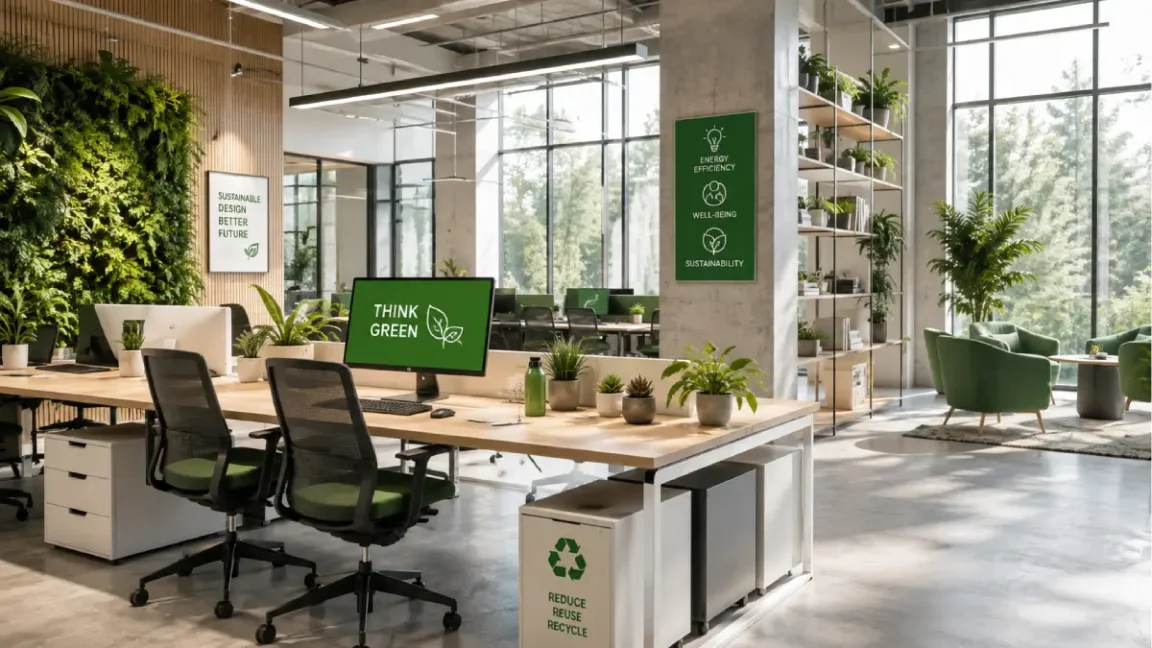
Modern workplace designs the demands in today’s workplaces The call for greater ecological accountability is growing, and employees are demanding workplaces that support health and productivity. Far beyond recycling waste paper and installing bins for re-use. Sustainable workplace design practices mean more than just being mindful of waste. It involves creating offices that make a minimum of the negative impact on environment.
Across the globe organizations are recognizing and increasingly are investing in the greenest workplaces because sustainability offers businesses so much: it ropes a longer-term business strategy, reduces ongoing working costs and offers a healthier work setting. Even in a new build or re-design, sustainable can be just beneficial.
What Is Sustainable Office Design?
A sustainable office design is designing, building and furnishing (and occupying) workplaces and operations in a more environmentally friendly and people-friendly manner.
This approach considers every feature of the workstation, including:
- Energy efficiency
- Natural lighting
- Indoor air quality
- Sustainable building materials
- Water conservation
- Waste reduction
- Ergonomic furniture
- Flexible workspaces
- Green landscaping
The objective is to create offices that benefit both people and the environment.
Why Sustainable Office Design Matters
Businesses increasingly recognize that office environments influence employee satisfaction and operational performance.
Major benefits include:
- Lower energy consumption
- Reduced carbon emissions
- Healthier indoor environments
- Increased employee productivity
- Improved workplace satisfaction
- Lower maintenance costs
- Stronger corporate sustainability goals
- Better company reputation
Sustainability is becoming an important consideration for organizations of every size. For more related articles visit our website
Core Principles of Sustainable Office Design
1. Energy Efficiency
Energy-efficient buildings consume less electricity while maintaining comfortable indoor conditions.
Examples include:
- LED lighting
- Motion sensors
- Smart thermostats
- High-performance insulation
- Energy-efficient HVAC systems
- Automated lighting controls
These technologies reduce both operating costs and environmental impact.
2. Maximizing Natural Light
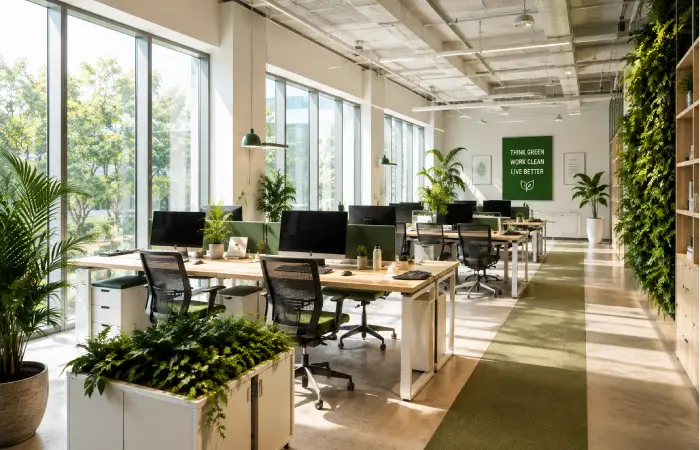
Natural daylight offers numerous advantages over artificial lighting.
Benefits include:
- Better employee mood
- Reduced eye strain
- Improved concentration
- Lower electricity consumption
- Enhanced workplace aesthetics
Large windows, skylights, and open layouts help maximize daylight throughout the office.
3. Eco-Friendly Building Materials
Selecting environmentally responsible materials reduces the overall environmental footprint of office construction.
Popular sustainable materials include:
- Recycled steel
- Bamboo
- Reclaimed wood
- Cork flooring
- Low-VOC paints
- Recycled glass
- Sustainable insulation
These materials often last longer while improving indoor air quality.
4. Indoor Air Quality
Healthy air contributes directly to employee wellness.
Good indoor air quality can be achieved through:
- Improved ventilation
- Air filtration systems
- Indoor plants
- Low-emission furniture
- Non-toxic adhesives
- Reduced chemical pollutants
Employees generally experience fewer respiratory issues in healthier environments.
5. Water Conservation
Modern offices can significantly reduce water consumption by installing:
- Low-flow faucets
- Sensor-operated taps
- Efficient toilets
- Rainwater harvesting systems
- Smart irrigation systems
These measures support sustainability while lowering utility costs.
Sustainable Office Furniture
Furniture plays an important role in environmentally responsible office design.
Characteristics include:
- Recycled materials
- FSC-certified wood
- Durable construction
- Modular designs
- Repairable components
- Recyclable materials
- Low-emission manufacturing
Investing in quality furniture reduces waste over time.
Flexible Workspaces
Flexible layouts make offices adaptable to changing business needs.
Examples include:
- Modular desks
- Collaborative zones
- Quiet rooms
- Shared workstations
- Multi-purpose meeting spaces
- Adjustable furniture
Flexible environments often reduce unnecessary space requirements.
Biophilic Design
Biophilic design incorporates natural elements into indoor environments.
Common features include:
- Living walls
- Indoor gardens
- Natural wood finishes
- Water features
- Large windows
- Green terraces
These elements create calming spaces that promote well-being.
Benefits for Employee Health
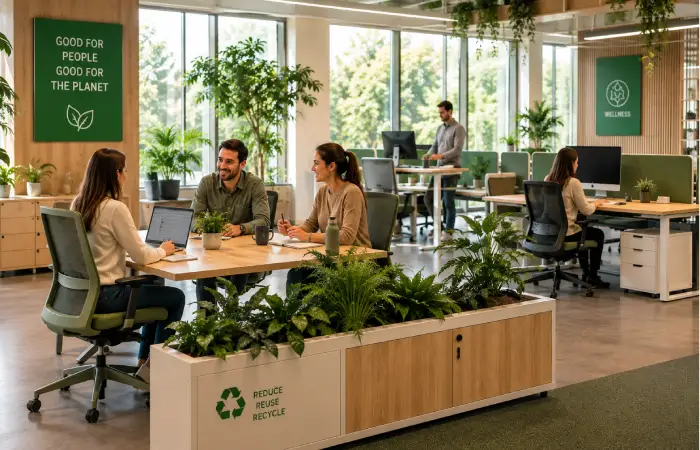
Employees spend many hours indoors each week.
Sustainable workplaces may support:
- Better concentration
- Reduced stress
- Improved comfort
- Better air quality
- Increased creativity
- Higher job satisfaction
- Greater engagement
Healthy work environments can contribute to stronger organizational performance.
Technology Supporting Sustainable Offices
Modern smart technologies improve sustainability.
Examples include:
| Technology | Benefit |
| Smart lighting | Reduces electricity use |
| Occupancy sensors | Prevents unnecessary energy consumption |
| Building automation | Optimizes HVAC performance |
| Smart blinds | Maximizes daylight |
| Energy monitoring systems | Tracks energy efficiency |
| Water monitoring | Detects waste and leaks |
Technology allows organizations to monitor and improve building performance continuously.
Steps to Create a Sustainable Office
Organizations can begin by:
- Conducting an energy audit
- Upgrading to LED lighting
- Choosing sustainable furniture
- Increasing natural lighting
- Reducing paper usage
- Installing water-saving fixtures
- Creating recycling stations
- Adding indoor plants
- Selecting eco-friendly materials
- Monitoring sustainability performance
Even small improvements can produce meaningful long-term results.
Common Challenges
Some organizations face obstacles such as:
- Initial investment costs
- Renovation limitations
- Older building infrastructure
- Budget constraints
- Employee adaptation
However, many sustainable improvements deliver long-term savings that offset initial expenses.
Future Trends
Emerging trends include:
- Net-zero office buildings
- Carbon-neutral workplaces
- Smart building automation
- Circular economy furniture
- AI-driven energy management
- Green certifications
- Wellness-focused office planning
- Climate-resilient building design
These innovations continue to shape the future of workplace design.
Frequently Asked Questions
What is sustainable office design?
It is the practice of creating workspaces that reduce environmental impact while supporting employee health, comfort, and productivity.
Does sustainable office design reduce costs?
Yes. Energy-efficient systems, water conservation, and durable materials can lower operating expenses over time.
Is sustainable office design only for large companies?
No: All sizes are able to do it- from lighting choices to purchasing environmentally-responsible furniture.
How do indoor plants support sustainability?
Workplace décor will be revitalised; air quality boosted; pleasant spaces created and in line with green strategy.
Why is natural light important?
More and More Natural Light! This can help minimize dependence on artificial light sources for a clearer workplace and a more comfortable atmosphere.
Conclusion
The setting up of the environmental workplace need not to take a firm hold over environmental policies -but it should be on about setting and getting best performing teams working which will improve profitability of firm in future through increase of health, morale and productivity of the team working for you. Integrating energy-saving technologies, eco-responsible materials and flexible workplace planning along with health-conscious considerations can give your business a sustainable competitive edge whether you are doing minor reconfigurations or a building a new space from the ground up.