
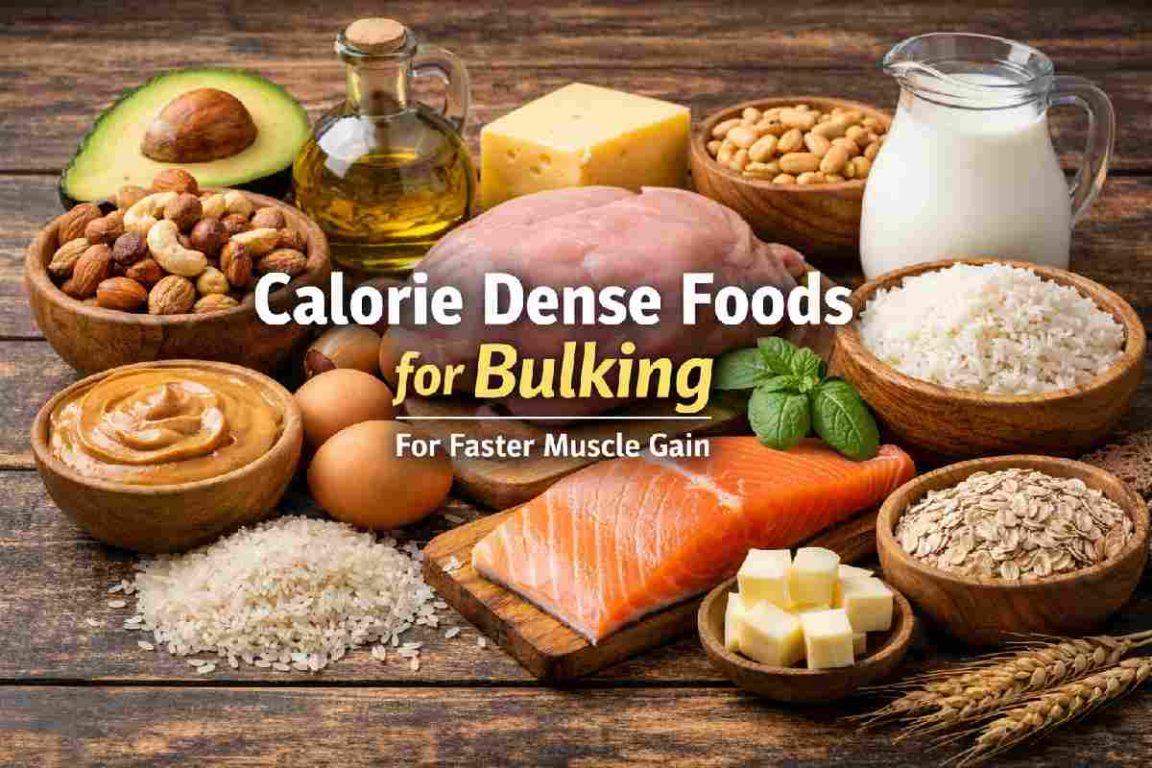
Calorie dense foods for bulking are foods that provide a high number of calories in a small serving size, making it easier to stay in a calorie surplus—essential for muscle growth.
If you struggle to eat enough or feel full quickly, these foods can help you gain weight and build muscle without forcing huge meals.
What Are Calorie Dense Foods (Simple Definition)
Calorie dense foods contain more calories per gram compared to low-calorie foods like vegetables or fruits.
Example comparison:
| Food Type | Calories (per 100g) |
|---|---|
| Spinach | ~23 kcal |
| Rice | ~130 kcal |
| Peanut Butter | ~590 kcal |
| Olive Oil | ~884 kcal |
The higher the calories per gram, the more “dense” the food is.
Who This Is For (And Who Should Be Careful)
Ideal for:
- Skinny individuals struggling to gain weight
- Gym beginners starting a bulking phase
- Athletes with high calorie needs
- People with low appetite
Be cautious if:
- You have digestive issues (high-fat foods may cause discomfort)
- You’re prone to fat gain
- You have metabolic conditions (consult a professional)
Why Calorie Dense Foods Matter for Bulking
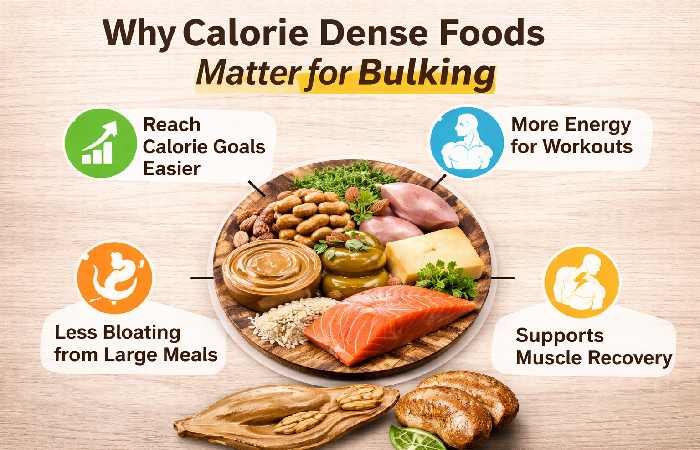
To build muscle, you need a calorie surplus—typically 250–500 extra calories per day.
However, eating large quantities of food can be difficult. That’s where calorie dense foods help:
Key benefits:
- Easier to reach calorie goals
- Less bloating compared to large meals
- More energy for workouts
- Supports muscle recovery
Best Calorie Dense Foods for Bulking
1. Healthy Fats (Highest Calorie Sources)
- Olive oil
- Butter or ghee
- Avocados
- Coconut oil
Just 1 tablespoon of oil = ~120 calories
2. Nuts and Nut Butters
- Almonds
- Peanuts
- Cashews
- Peanut butter
Why they work:
- High in calories + healthy fats
- Easy to snack on
- Great for shakes
3. Dairy Products
- Whole milk
- Cheese
- Yogurt
Benefits:
- High in protein + calories
- Supports muscle repair
4. Carbohydrate-Rich Foods
- Rice
- Pasta
- Oats
- Potatoes
These provide:
- Energy for workouts
- Glycogen replenishment
5. Protein + Calorie Combos
- Eggs
- Chicken thighs
- Salmon
- Paneer
These help ensure your weight gain is muscle, not just fat.
Practical Meal Ideas for Bulking
Easy High-Calorie Meal Plan Example
Breakfast:
- Oats with milk + peanut butter + banana
Lunch:
- Rice + chicken + olive oil drizzle
Snack:
- Handful of nuts + smoothie
Dinner:
- Paneer or fish + rice + vegetables
Before bed:
- Milk or yogurt
Smart Bulking Strategy (Step-by-Step)
Step 1: Calculate Your Calorie Needs
Add 250–500 calories above maintenance.
Step 2: Focus on Calorie Density
Choose foods that pack more calories in smaller portions.
Step 3: Eat 4–6 Meals Daily
Smaller, frequent meals are easier to manage.
Step 4: Add Liquid Calories
Smoothies and shakes are easier than solid food.
Step 5: Track Progress
Aim for 0.25–0.5 kg weight gain per week.
Common Mistakes to Avoid
1. Eating Only Junk Food
Yes, junk food is calorie dense—but it leads to fat gain, not muscle.
2. Ignoring Protein
Without enough protein, you won’t build muscle effectively.
3. Overeating Too Fast
Leads to unnecessary fat gain.
4. Skipping Strength Training
Bulking without training = fat gain.
Myths vs Facts
Myth 1: “More calories = faster muscle”
Fact: Excess calories often turn into fat.
Myth 2: “Dirty bulking is the fastest way”
Fact: It leads to poor body composition.
Myth 3: “You must eat huge meals”
Fact: Calorie dense foods reduce meal size.
Realistic Expectations (What Results Look Like)
| Timeline | Expected Result |
|---|---|
| 2 weeks | Slight weight increase |
| 1 month | Noticeable strength gain |
| 3 months | Visible muscle growth |
Consistency matters more than perfection.
Data & Evidence (Recent Insights)
- Research (2023–2025) shows calorie surplus + resistance training is the most effective way to gain lean mass.
- Studies suggest 1.6–2.2g protein/kg body weight for optimal muscle growth.
- Excess calorie intake beyond ~500 kcal/day increases fat gain risk significantly.
When Calorie Dense Foods Backfire
- If you’re not training
- If you’re overeating ultra-processed foods
- If you ignore portion control
FAQs
What are the best calorie dense foods for bulking?
Foods like nuts, oils, dairy, rice, and eggs are among the best because they provide high calories and essential nutrients.
Can I bulk without calorie dense foods?
Yes, but it’s harder because you’ll need to eat much larger portions.
How many calories should I eat for bulking?
Typically 250–500 calories above your maintenance level.
Are shakes good for bulking?
Yes, liquid calories are easier to consume and digest.
Is dirty bulking effective?
It may increase weight quickly, but mostly fat—not recommended long-term.
Final Conclusion
Calorie dense foods for bulking make it significantly easier to achieve a calorie surplus without forcing yourself to eat large meals. By focusing on nutrient-rich options like nuts, oils, dairy, and whole foods—combined with proper training—you can gain muscle efficiently while minimizing fat gain.
The next step: calculate your calorie needs, build a simple meal plan, and stay consistent for at least 8–12 weeks.