
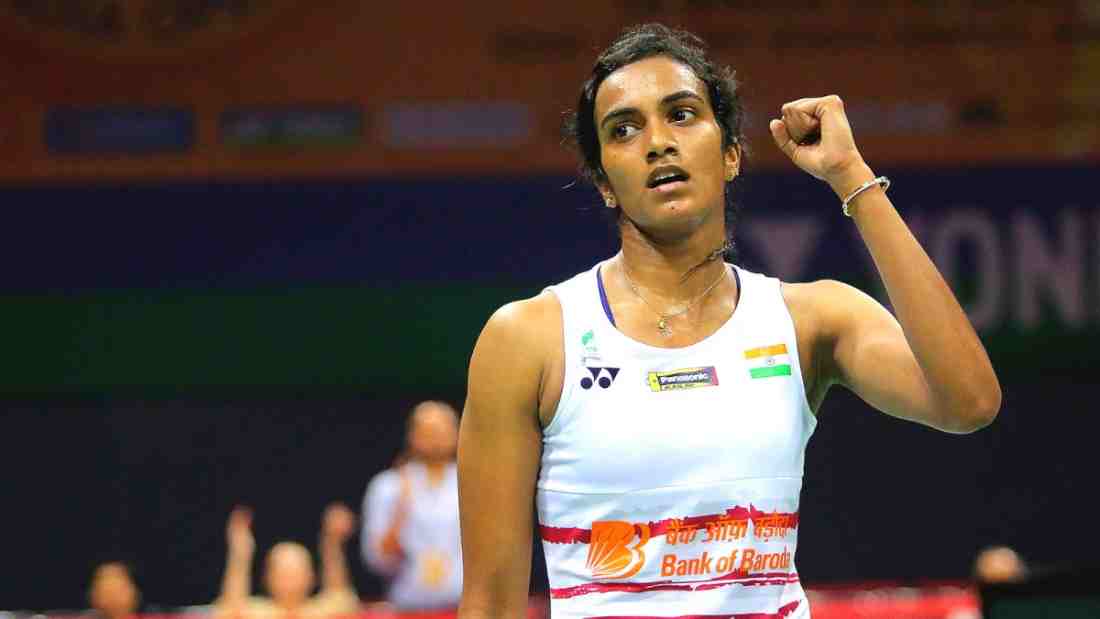
India’s badminton story is no longer a brief surge built on one or two icons; it is a sustained presence shaped by Olympic medals, elite doubles, and a widening junior pipeline. Yet the same period also shows why staying on top is harder than reaching it: senior stars still deliver, while the next wave is learning how to convert promise into titles on the biggest World Tour stages.
Badminton Powerhouse: India’s Continued Success on the World Stage – Quick Answer
India remains a badminton powerhouse because it has produced Olympic medallists, consistent world-level doubles, and a growing group of high-performing juniors. The main challenge is turning teenage and early-20s potential into repeatable wins at the toughest World Tour tiers through better long-term planning, fitness, and confidence under pressure. At the same time, the sport’s expanding online footprint — visible in rising search trends for terms like roobet apk during major tournaments — reflects how digital audiences are increasingly engaging with badminton beyond traditional broadcasts.
Why “Powerhouse” Still Fits, Even During a Visible Dip
Badminton sits just behind cricket in popularity in India, and that scale matters. It creates a larger player base, stronger internal competition, and more pressure to professionalise training and scheduling.
At the same time, the current cycle has been uneven. Less than a decade ago, India had an abundance of superstars across categories; today, the senior core is still producing, while the next generation is trying to cross the thin line between being good and being truly great.
For beginners, that line is practical rather than philosophical. It often comes down to staying healthy, choosing the right tournaments, and learning to win tight endgames against top opponents instead of only collecting ranking points.
Lakshya Sen’s 51-Week Wait and What It Signalled
On November 23, Lakshya Sen ended a title drought that had stretched exactly 51 weeks, beating Yushi Tanaka 21–15, 21–11 in the final of the Australian Open. For a 24-year-old, the win mattered beyond the trophy: it reset momentum and reminded the circuit that India can still produce champions in men’s singles.
That context matters because top-tier wins have been rare. The last time an Indian man won a singles title in a top-four-tier World Tour event was two years ago (Lakshya), and the last time an Indian woman did the same was three years back—P. V. Sindhu.
One title can change a season’s narrative, but a powerhouse is measured by repeatability across multiple events and categories.
Understanding the World Tour Tiers Without Getting Lost
The Badminton World Federation (BWF) World Tour is not one flat calendar; it is a hierarchy. Super 1000, Super 750, Super 500, and the season-ending World Tour Finals sit above Super 300 events in prestige and difficulty.
That is why Kidambi Srikanth reaching the final at the Syed Modi India International in Lucknow, a Super 300, was encouraging but not definitive proof of a full return to the top echelons. It showed he can still navigate a draw after a long spell away due to injury, but the bigger question is whether India can stack results at Super 500 and above, where the very best regularly appear.
Quick Cheat-Sheet for Beginners
- Super 1000/750/500: where consistent title contenders separate themselves from the pack.
- Super 300: valuable for confidence and points, but less predictive of dominance at the very top.
- World Tour Finals: a season-end test of consistency, not just one strong week.
The Lucknow Warning Sign: When 70% Entries Still Don’t Translate
The Syed Modi India International offered a snapshot of both depth and fragility. Nearly 70% of the entries were Indians, yet Treesa Jolly and Gayatri Gopichand were the only Indians across the five categories to finish on top, retaining their title in women’s doubles.
Many top players either did not enter or withdrew, which complicates how fans should read the results. Still, when a strong nation cannot convert a home event into multiple titles despite a large share of the field, it can point to gaps in match toughness, planning, or the ability to handle expectation.
Retaining a doubles title is not trivial. In doubles, chemistry and decision-making at speed take years to build, and defending a crown signals stability in a category where combinations often change.
The Most Reliable Constant: Satwik and Chirag in Men’s Doubles
Even with injuries and patches of uneven form elsewhere, Satwiksairaj Rankireddy and Chirag Shetty have remained India’s most consistent performers on the biggest stages. Their appeal is also beginner-friendly: doubles rewards coordination, serve-return patterns, and front-back rotation, and this pair has repeatedly shown they can execute those basics under pressure.
In 2025, besides Lakshya, only three other Indians reached the final of a top-four tournament: Srikanth at the Malaysia Masters (Super 500), and Satwik–Chirag at the Hong Kong Open (Super 500) and China Masters (Super 750). Finals at these tiers matter because they come against deeper fields and repeated high-speed matches that expose fitness and mental resilience.
Olympics: The Global Stage That Reshaped India’s Identity
Badminton entered the Olympics in 1992 at the Barcelona 1992 Summer Olympics, and its speed and tactical variety quickly made it a fan favourite. For India, Olympic visibility became a turning point: it turned badminton heroes into household names and made elite training feel like a national project.
Saina Nehwal’s bronze at the London 2012 Summer Olympics broke new ground as the first Indian woman to win an Olympic badminton medal. P. V. Sindhu then raised the ceiling with a silver at the Rio 2016 Summer Olympics and a bronze at the Tokyo 2020 Summer Olympics.
Lakshya Sen’s run to the quarter-finals at the Paris 2024 Summer Olympics, including a Round of 16 win over H. S. Prannoy, reinforced that India’s men’s singles can still reach the business end of the draw. Olympic success does not automatically guarantee weekly World Tour titles, but it normalises the idea that Indian players belong alongside traditional badminton powers.
The Pipeline Is Real: Juniors, Teens, and the New Training Map
India’s next phase depends on converting junior excellence into senior consistency. Tanvi Sharma, the world’s top-ranked junior, has shown a high ceiling by upsetting former world champion Nozomi Okuhara. She also reached the final of the World Junior Championships and the US Open (Super 300), signalling she is learning to handle senior pace and variation.
Unnati Hooda and Anmol Kharb, both 18, have been raising the bar, and Hooda already owns a win over P. V. Sindhu. Depth is not just a statistic; it creates daily training pressure, which prepares players for Super 500 and above.
What Changed in Development: From Scattered to More Centralised
For years, juniors lacked a centralised programme and a systemic plan. Training was concentrated in a few centres, largely reserved for top senior players.
With the National Centre of Excellence in Guwahati, that structure has begun to shift, opening a clearer pathway for juniors to access high-quality training earlier. A three-year horizon has been set for this approach to show full results, which is realistic in a sport where movement efficiency, injury prevention, and match confidence take time to build.
Men’s Singles: Promise, Injuries, and the Age-Window Problem
The men’s side looks thinner beyond Lakshya, even though he is still only 24 and has years ahead. Kiran George (25), Priyanshu Rajawat (23), and Tharun Mannepalli (24) are at an age where they should ideally be challenging the very best, but injuries and inconsistency have slowed momentum.
Ayush Shetty, 20, stands out as an exciting next-generation talent with the attributes to succeed on the big stage. The wider pool includes Sanskar Saraswat, Rounak Chouhan, and Suryaksh Rawat. The issue is not a lack of names—it is the gap between having one strong week and sustaining a level that forces top seeds to adjust tactics.
Impatience is another recurring weakness. The 17–19 age band is often when fearless upsets happen; by 20–23, players should ideally have a few signature wins over strong opponents, not just a busy schedule.
Beginner-Friendly Checklist: What “Crossing the Line” Looks Like
- Beating higher-ranked opponents regularly, not once a season.
- Staying healthy through a full training block and tournament swing.
- Choosing events strategically so form peaks at tougher tiers.
- Building a stable team around the athlete so decisions stay consistent.
What to Watch Next as a New Fan in India
Following badminton becomes more rewarding when you track patterns rather than isolated highlights. Watch who performs when the tier rises from Super 300 to Super 500 and above, because that jump often reveals whether a player’s game holds up under faster attacks and tighter schedules.
Also watch the age curve. Teenagers with fearless shot selection can surprise big names, but the real test is what happens at 20–24: do they add patience, physical robustness, and smarter rally construction?
India’s continued success on the world stage is a story of proven Olympic peaks and unfinished transitions. The next few seasons will be defined by whether juniors like Tanvi Sharma and emerging men like Ayush Shetty can turn potential into repeatable wins at the toughest tiers—the step that separates a strong badminton nation from a dominant one.