
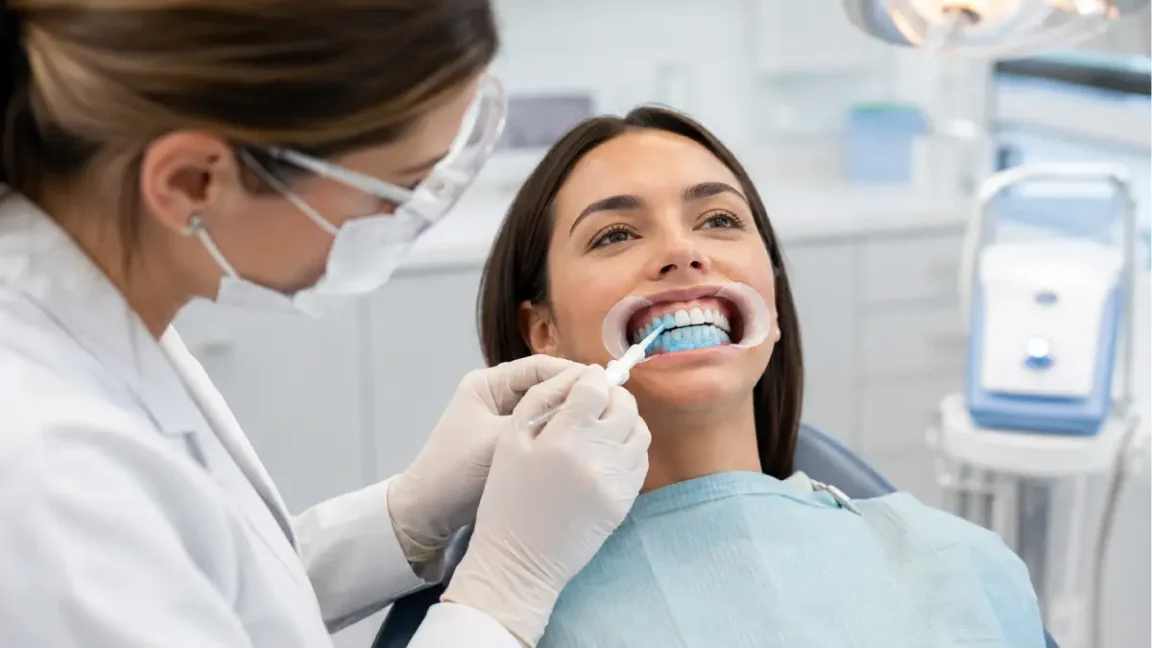
When your teeth feel a little yellow and dull, changing this can really impact on how you look and feel, and getting rid of the stains or yellowness can also sometimes prove a little more difficult than you may think, just by brushing them, so if you think that white teeth might make more of a difference than you believe possible then see if teeth whitening treatment works for you.
In a way, this treatment process is not unlike using tooth whitening toothpaste or home treatments however, professional tooth whitening is conducted under the dentist’s observation. The dentist can take examination over your tooth and gums first and determine what has probably caused for discoloration and be able to take care on tooth surrounding tissues. Then chose what kinds of tooth whitening procedure.
In this article, we travel how in-office lightening treatment works, whether the process will hurt, how soon & what we should eat afterward, whether yellowing teeth can be whitened by professionals, advantages & disadvantages, & how to select a dentist to get action from.
What Is In-Office Teeth Whitening?
The whitening of teeth while the procedure is carried out by a professional by means of placing the bleaching chemical to the natural teeth inside dental surgery.
The level of whitening agent, how long is left on and the concentration varies depending on the whitening system, the colour and nature of your teeth and the judgment of your dentist.
To compare professional whitening with other methods and understand the options available, read our complete guide to teeth whitening treatments.
Professional whitening can be particularly useful for people with:
- Surface stains from coffee, tea or certain foods
- Tobacco-related staining
- Age-related tooth discolouration
- Mild to moderate yellowing
- Teeth that have become darker over time
Whitening doesn’t work on all types of stains, though. Fillings, crowns, veneers and other tooth-coloured restorations won’t whiten the way that a natural enamel surface will.
How to Do Teeth Whitening In-Office?
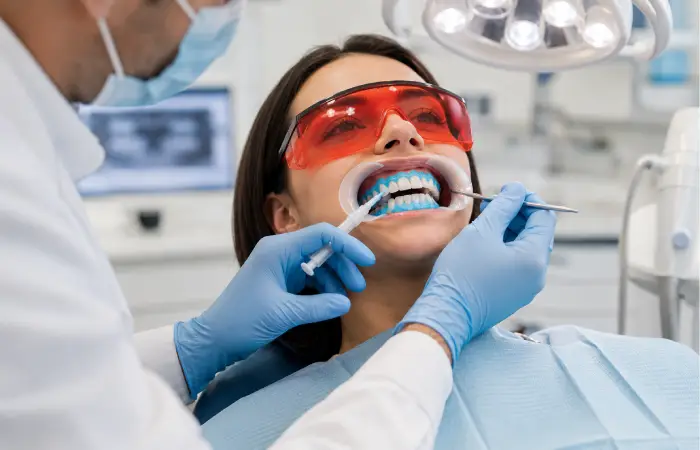
The procedure is normally completed at a dental clinic and involves several steps.
1. Dental examination
Your dentist examines the teeth and gums. It may be that their looking for cavities, gum disease, cracks or any other teeth or gums conditions that may need to be treated before having their teeth whitened.
2. Shade assessment
The dentist may record your existing tooth shade so that the change can be assessed after treatment.
3. Protection of the gums
Since commercial professional whitening preparations tend to cause irritation to surrounding soft tissues, the dentist takes a step to shield your lips, gingiva, and other areas.
4. Application of whitening gel
A professional whitening product is carefully applied to the teeth according to the manufacturer’s instructions and the dentist’s treatment plan.
5. Controlled treatment sessions
Depending on the system, the whitening product may remain on the teeth for a specific period and may be reapplied during the appointment.
Some systems use a specialised light, while others rely on the whitening chemistry without additional light activation. Your dentist can explain which system they use and why.
6. Final assessment
Once your teeth have been treated, the dentist will examine your mouth and explain the result and the aftercare.
A full appointment may last an hour though times can vary between patients and teeth-whitening systems.
Is In-Office Teeth Whitening Painful?
In-office teeth whitening is generally not considered painful, but some people experience temporary tooth sensitivity during or after treatment.
Sensitivity may feel like a brief sharp response to cold air, cold drinks or other triggers. Gum irritation can also occur if whitening material contacts the soft tissues.
The likelihood and intensity of sensitivity can vary depending on:
- Existing tooth sensitivity
- Enamel condition
- Gum health
- The whitening product used
- Treatment duration
- Individual sensitivity
Tell your dentist if you already have sensitive teeth. They may adjust the treatment approach or recommend measures to make the experience more comfortable.
Severe or persistent pain is not something you should simply ignore. Contact your dentist if significant discomfort continues after whitening.
How Long After In-Office Teeth Whitening Can I Eat?
Your dentist should provide specific instructions based on the whitening system used. In general, many dentists recommend waiting for a short period before eating and being particularly careful with strongly coloured foods and drinks immediately after treatment.
For the first day or so, it can be sensible to limit foods and beverages that are likely to stain teeth, such as:
- Coffee
- Black tea
- Red wine
- Cola and other dark drinks
- Curry and strongly coloured sauces
- Berries with intense pigmentation
- Tobacco products
Choose lighter-coloured foods and drinks where practical, and follow the aftercare instructions provided by your dentist.
Can Yellow Teeth Be Professionally Whitened?
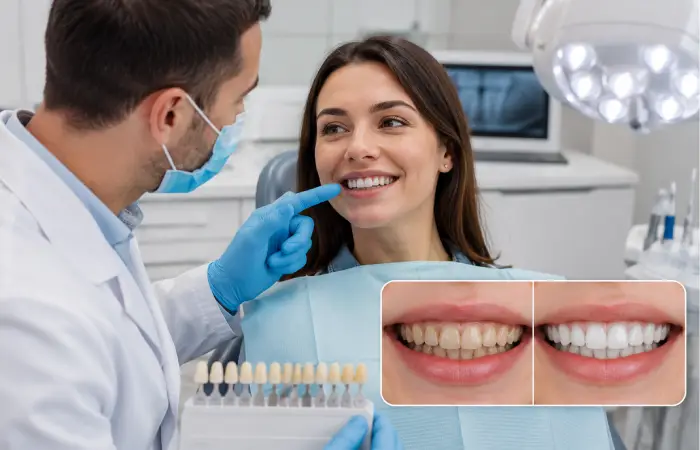
Yes, many naturally yellow or stained teeth can be professionally whitened. However, the amount of improvement depends on why the teeth are yellow.
External stains caused by foods, drinks or tobacco may respond well to professional whitening. Natural tooth colour and some forms of internal discolouration can be more difficult to change.
A dentist can determine whether whitening is appropriate and explain what result is realistically achievable.
It is also important to understand that teeth do not necessarily become perfectly white. The goal is usually to achieve a brighter, natural-looking shade rather than an unrealistic colour.
What Are the Benefits of In-Office Teeth Whitening?
Professional whitening offers several advantages compared with many home whitening options.
Faster visible results
One of the main reasons people choose professional treatment is convenience. A dentist can perform a concentrated whitening treatment during a scheduled appointment, allowing many patients to notice a significant change relatively quickly.
Professional supervision
A dental professional can assess your oral health before treatment and monitor the whitening process.
Personalised treatment
Your dentist can consider your existing tooth shade, sensitivity, restorations and oral health when recommending treatment.
Helps remove common stains
Professional whitening can help reduce certain stains associated with coffee, tea, tobacco and ageing.
Convenient for special occasions
People preparing for events such as weddings, photographs, celebrations or professional occasions may prefer a treatment that can produce noticeable results without relying solely on a lengthy home routine.
Better understanding of your oral health
A whitening consultation can also identify dental issues that may need attention before cosmetic treatment.
Why Should You Consider In-Office Teeth Whitening?
The decision to whiten your teeth is personal. Professional whitening may be worth considering if you are unhappy with tooth discolouration and want a dentist-supervised cosmetic treatment.
It may be especially suitable if:
- Your teeth have become noticeably darker with age.
- You have persistent surface staining.
- Home whitening products have not produced the result you wanted.
- You want a professionally monitored treatment.
- You have an upcoming event and want a brighter smile.
- You want advice based on your individual dental condition.
However, whitening is a cosmetic procedure rather than a substitute for good oral hygiene. Regular brushing, flossing, dental check-ups and limiting staining habits remain important.
Who Is the Best Doctor to Visit for Teeth Whitening?
The best professional to visit for teeth whitening is a qualified and registered dentist, preferably one with experience in cosmetic and restorative dentistry.
Rather than choosing a provider solely because they advertise the cheapest whitening treatment, consider:
- Dental qualifications and registration
- Experience with professional teeth whitening
- Whether they perform an oral examination before treatment
- The whitening system they use
- Their approach to sensitivity management
- Whether they explain realistic results
- Whether the clinic follows appropriate infection-control procedures
- Patient reviews and reputation
- Whether they clearly explain the total treatment cost
A good dentist should not promise that every patient will achieve an identical shade. Tooth colour, enamel condition, existing restorations and the cause of staining can all influence the outcome.
AI is also being explored in veterinary dentistry to support the analysis of animal dental X-rays; learn more in our guide to Nerovet AI Dental.
How to Choose the Right Dentist for In-Office Teeth Whitening
Choosing the right dentist is just as important as choosing the whitening treatment.
Look for proper dental credentials
Make sure the practitioner is appropriately qualified and registered to practise dentistry in your location.
Ask about the whitening system
Ask what product or system the clinic uses and whether it is suitable for your teeth.
Have your teeth examined first
A responsible provider should check your oral health before beginning cosmetic treatment.
Discuss sensitivity
If you have experienced sensitivity before, mention it during your consultation.
Ask about realistic results
Instead of asking only how many shades your teeth will become lighter, ask what result is realistic for your current tooth colour.
Understand the price
Ask what is included in the treatment price and whether follow-up appointments or maintenance treatments are additional.
What Can Affect In-Office Teeth Whitening Results?
Whitening results differ from person to person. Factors that can influence the outcome include:
- Starting tooth colour
- Type and severity of staining
- Age
- Diet
- Smoking or tobacco use
- Oral hygiene
- Enamel condition
- Type of whitening treatment
- Existing dental restorations
Some discolouration may respond better to other cosmetic or restorative dental options rather than conventional whitening.
In a different area of dentistry, artificial intelligence can assist with veterinary dental-image analysis; explore how Nerovet AI dentistry works to learn more.
How Long Does In-Office Teeth Whitening Last?
The longevity of whitening results varies. Teeth can gradually become stained again through normal eating and drinking habits.
You can help maintain a brighter smile by:
- Brushing twice a day with fluoride toothpaste
- Cleaning between your teeth
- Having regular dental check-ups
- Limiting frequent consumption of heavily staining drinks
- Rinsing your mouth with water after strongly coloured foods or drinks
- Avoiding tobacco products
- Following your dentist’s maintenance recommendations
Your dentist can also tell you whether occasional maintenance whitening is appropriate.
Is In-Office Teeth Whitening Safe?
When appropriately performed by a qualified dental professional, teeth whitening is generally considered a safe cosmetic dental treatment for suitable patients.
Temporary sensitivity and gum irritation are among the more common side effects. However, whitening may not be appropriate for everyone, particularly when untreated dental problems are present.
A dental examination before treatment helps determine whether whitening is suitable and whether any dental issues should be treated first.
Who Should Avoid or Delay Teeth Whitening?
Professional whitening may need to be postponed or avoided in certain situations. Your dentist may recommend treating an underlying problem first if you have:
- Untreated cavities
- Significant gum disease
- Cracked or damaged teeth
- Severe tooth sensitivity
- Certain forms of enamel damage
- Oral conditions requiring treatment
Pregnant or breastfeeding patients should discuss cosmetic whitening with their health care or dental professional before proceeding.
Does In-Office Teeth Whitening Work on Crowns, Veneers or Fillings?
Whitening products primarily affect natural tooth structure. They generally do not whiten existing dental restorations such as:
- Crowns
- Veneers
- Dental bonding
- Tooth-coloured fillings
If your natural teeth become lighter while an existing restoration remains the same colour, a colour mismatch may become more noticeable.
Your dentist can assess your restorations and discuss the best approach before whitening.
In-Office Teeth Whitening vs At-Home Whitening
Both professional in-office and dentist-supervised home whitening can be useful, but they offer different experiences.
| Feature | In-Office Whitening | At-Home Whitening |
| Professional supervision | Yes | Depends on the method |
| Treatment location | Dental clinic | Home |
| Convenience | Appointment-based | Flexible |
| Speed of results | Often faster | Usually takes longer |
| Personalisation | High | Varies |
| Sensitivity monitoring | Dentist supervised | Depends on product |
| Cost | Usually, higher | Often lower |
The best option depends on your goals, oral health, budget and how quickly you want to see a change.
What Should You Do Before In-Office Teeth Whitening?
Before your appointment:
- Have a dental examination if one has not been completed recently.
- Tell your dentist about tooth sensitivity.
- Mention any dental restorations you have.
- Follow any pre-treatment instructions provided by the clinic.
- Avoid experimenting with multiple whitening products immediately before professional treatment.
Do not assume that stronger whitening automatically means better whitening. Professional treatment should be appropriate for your teeth and gums.
What Should You Do After In-Office Teeth Whitening?
After treatment, follow your dentist’s instructions carefully.
Good general practices include:
- Maintain regular oral hygiene.
- Avoid tobacco.
- Limit highly staining foods and drinks immediately after treatment.
- Drink water regularly.
- Follow any sensitivity recommendations from your dentist.
- Do not use additional whitening products unless your dentist recommends them.
Frequently Asked Questions
How quickly does in-office teeth whitening work?
Clients typically experience a readily apparent result following an in-office appointment, however it really is dependent on the original shade and stain characteristics, as well as many other factors.
Is professional teeth whitening better than whitening toothpaste?
Whitening toothpastes will mainly be able to remove some surface stains. Whitening will help change the colour of natural teeth to a higher degree when carried out professionally by your dentist.
Can one appointment whiten yellow teeth?
With many patients a single treatment may already effect significant improvement, however the final result is highly dependent on the cause and extent of tooth discoloration.
Do teeth whiten damage enamel?
When an appropriate professional whitening treatment is used correctly, significant permanent enamel damage is not expected. Temporary sensitivity is more common.
Can I drink coffee after in-office teeth whitening?
It is generally sensible to limit coffee immediately after whitening because it can contribute to staining. Follow the specific dietary instructions given by your dentist.
Why are my teeth still yellow after whitening?
Natural tooth colour, deeper staining, enamel characteristics and certain types of discolouration can limit how much whitening is possible. Your dentist can explain alternative options if whitening does not achieve the desired result.
How often can I have professional teeth whitening?
There is no single schedule that is appropriate for everyone. The frequency should depend on your oral health, sensitivity, previous treatment and your dentist’s recommendations.
Final Thoughts
In-office teeth whitening can be an effective and convenient way to brighten naturally discoloured or stained teeth when performed appropriately by a qualified dentist. It offers professional supervision, personalised treatment and potentially faster visible results than many home-based options.
However, whitening is not suitable for every type of discolouration and does not change the colour of existing crowns, veneers or fillings. A dental examination is therefore an important first step.
If you are considering professional whitening, choose a qualified dentist who evaluates your oral health, explains the available treatment, discusses possible sensitivity and sets realistic expectations rather than simply promising an extremely white smile.
A brighter smile should ultimately be achieved in a way that prioritises healthy teeth, healthy gums and safe cosmetic treatment.