
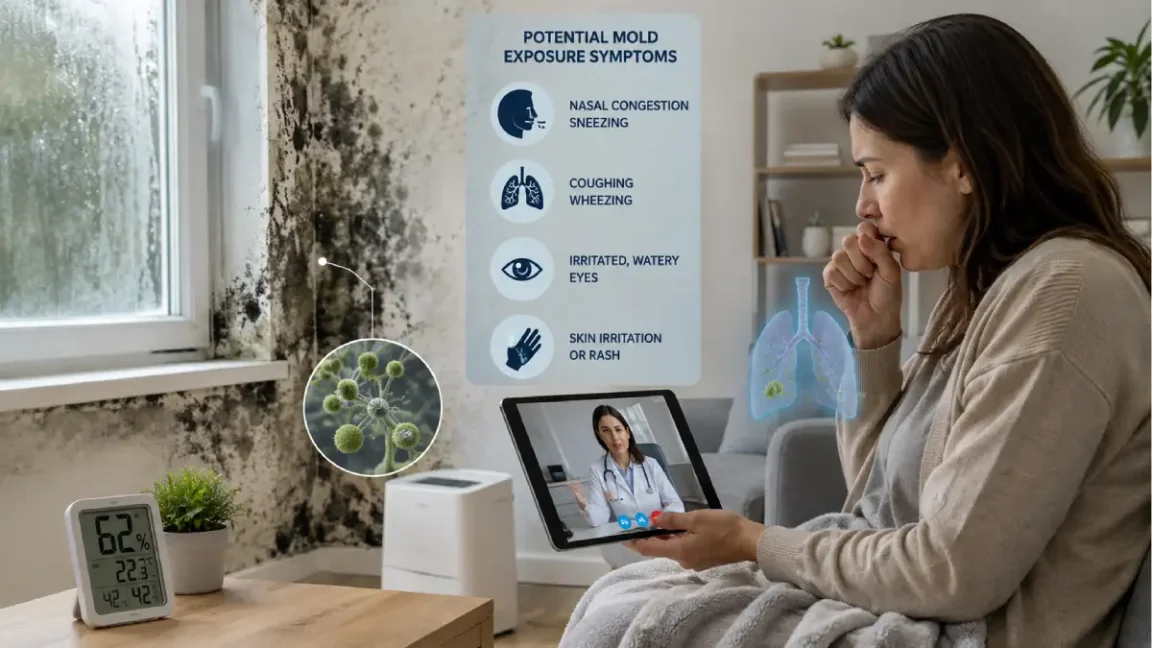
Living or working for an extended period in a damp, moldy environment is obviously a worrying situation when problems like cough, chest congestion, wheezing or even eyes and skin irritation do not abate with no known reason for this developing. If you are seeking a guide to prolonged exposure to black mold symptoms, be sure you know the medical facts and ways in which help may be derived.
It’s common for term black mold to be used for Stachybotrys chartarum, this is a mold that grows on very wet substances if the substance is consistently wet. Simply knowing the color of mold doesn’t say anything about one mold type versus another. It’s important to realize different mold types are different colors, and different color does not mean higher or lesser danger, CDC website.
In this guide, we examine potential symptoms and how you can determine if mold could be the source of health problems, the potential outcomes of extended exposure, diagnosis and treatment for mold-related illness, whether mold can be ” flushed out” and food sources that can help aid you during recovery.
What Happens If You Are Exposed to Black Mold for Too Long?
Long-term exposure to damp or moldy environments may contribute to ongoing respiratory, allergic or irritation-related symptoms in some people.
The most established health effects of indoor mold exposure include:
- Stuffy or runny nose
- Sneezing
- Coughing
- Wheezing
- Throat irritation
- Red, itchy or watery eyes
- Skin irritation or rash
- Asthma symptoms or asthma attacks in susceptible people
- Respiratory problems in some individuals
The CDC reports that damp and moldy environments are associated with respiratory symptoms, worsening asthma, allergic rhinitis, eczema and, in susceptible individuals, hypersensitivity pneumonitis.
However, not everyone exposed to mold becomes sick. Individual sensitivity, existing allergies, asthma, lung disease, immune status and the characteristics of the environment can all influence health effects.
Long-term exposure also does not automatically mean that a person has permanent mold-related damage.
The most important step is to reduce or eliminate ongoing exposure and address the moisture problem rather than focusing only on treating symptoms.
What Are the Symptoms of Long-Term Exposure to Black Mold?
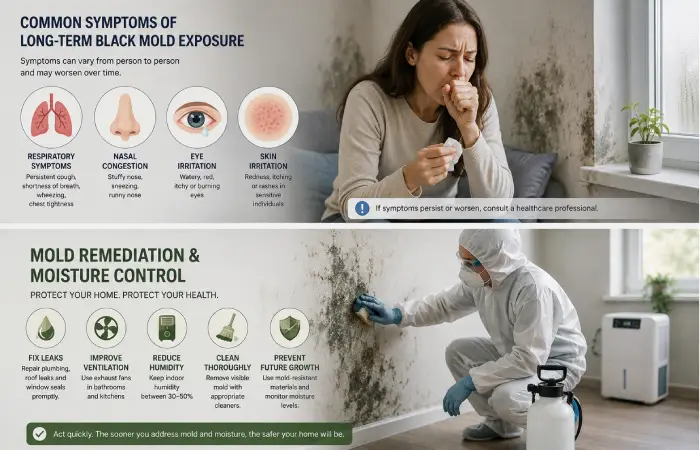
The symptoms can vary considerably from person to person. The most well-established symptoms are generally allergic, respiratory and irritation-related.
Common respiratory symptoms
These may include:
- Persistent cough
- Wheezing
- Shortness of breath
- Chest tightness
- Throat irritation
- Nasal congestion
- Runny nose
- Sneezing
- Sinus-type symptoms
People with asthma may notice that their symptoms become worse when spending time in a damp or moldy building.
Eye symptoms
Mold exposure may cause:
- Red eyes
- Itchy eyes
- Watery eyes
- Burning or irritated eyes
These symptoms can resemble seasonal allergies, making the environmental connection easy to overlook.
Skin symptoms
Some people may experience:
- Skin irritation
- Itching
- Redness
- Rash
- Dermatitis
Mold can cause allergic reactions as well as irritation of the skin and other parts of the body.
Other symptoms sometimes reported around mold exposure
People living in damp buildings sometimes report symptoms such as headaches, fatigue or difficulty concentrating. However, these symptoms are not specific to mold exposure and can have many other explanations.
For this reason, symptoms alone cannot establish that black mold is the cause.
What Are the 17 Common Signs of Mold Illness?
There is no universally accepted medical checklist of exactly 17 symptoms that proves someone has “mold illness.” Instead, people commonly search for a list like this because they want to compare their symptoms with recognized effects of mold exposure.
Commonly reported symptoms associated with mold exposure or damp environments include:
- Persistent coughing
- Wheezing
- Nasal congestion
- Runny nose
- Frequent sneezing
- Sore or irritated throat
- Red or itchy eyes
- Watery eyes
- Skin irritation
- Skin rash
- Asthma worsening
- Chest tightness
- Shortness of breath
- Sinus or upper-airway irritation
- Headaches
- Fatigue
- Difficulty breathing
The first group—particularly allergic, respiratory and irritation symptoms—is better supported by public-health evidence than the broader collection of symptoms sometimes promoted online as “mold toxicity.”
If you have several of these symptoms, don’t assume mold is automatically responsible. A doctor can investigate other possible causes. For more related articles visit our website.
How to Tell If You Are Sick From Black Mold?
There is no single symptom that can confirm that black mold is making you sick.
A doctor will generally consider several factors, including:
1. Your symptoms
Tell your doctor exactly what you are experiencing, including when symptoms started and whether they are getting worse.
2. Your exposure history
Think about whether you:
- Live in a damp home
- Have visible mold
- Smell a persistent musty odour
- Have experienced flooding
- Have had plumbing or roof leaks
- Work in a damp building
- Notice symptoms improving when away from the building
A connection between symptoms and a particular environment can provide useful information, although it does not prove causation.
3. Your medical history
Existing asthma, allergies or lung disease can influence how strongly you react to mold.
4. Appropriate medical testing
Depending on your symptoms, a healthcare professional may perform allergy evaluation, lung-function testing or other tests to investigate conditions such as asthma or other respiratory problems.
For example, CDC guidance notes that asthma diagnosis can involve medical history, examination and pulmonary function testing such as spirometry.
Can You Test Your Body for Black Mold?
Be cautious about commercial tests that claim to diagnose a person’s health condition simply by measuring mold toxins.
There is no simple home test that can determine whether your symptoms are caused by black mold exposure.
The CDC also does not recommend routine mold testing of homes as a way to determine whether someone will become sick. Instead, visible mold, moisture problems and musty odours should be addressed.
A doctor should determine which medical tests are appropriate based on your symptoms.
How to Flush Mold Out of Your System?
There is an important misconception behind the phrase “flush mold out of your system.”
There is no proven detox drink, juice, supplement or special diet that has been established as a way to remove household mold exposure from the body.
Instead, the most important approach is to:
- Stop or reduce continued exposure.
- Correct the moisture problem.
- Remove mold safely.
- Treat any resulting medical condition.
- Maintain adequate hydration and nutrition.
- Follow your doctor’s recommendations.
The EPA identifies moisture control as the key to controlling indoor mold. Mold should be removed and the underlying water or humidity problem corrected.
Should you use a mold detox?
Be careful with products marketed as “mold detox,” “mycotoxin cleanses” or similar treatments.
Some may be expensive and may not have good evidence behind their claims. If you are considering supplements, discuss them with a healthcare professional, particularly if you take medications or have an existing medical condition.
How Is Mold Exposure Treated?
Treatment depends on the health problem that mold exposure is causing or aggravating.
For allergies
A doctor may recommend appropriate allergy treatment, which can include medications or other measures depending on the person’s symptoms.
For asthma
If mold is triggering asthma symptoms, treatment may involve standard asthma management prescribed by a healthcare professional.
For skin irritation
Skin symptoms may require treatment directed at the underlying dermatitis or allergic reaction.
For respiratory complications
Persistent breathing problems require medical evaluation. Some people with underlying lung disease or weakened immune systems can be at higher risk of serious fungal infections.
The treatment should therefore target the actual diagnosed condition, rather than assuming every symptom represents “mold toxicity.”
What Doctor Should You See for Black Mold Exposure?
The best starting point is usually a primary care doctor or family physician.
They can evaluate your symptoms and decide whether you need a specialist.
Depending on your symptoms, you may be referred to:
Allergist or immunologist
An allergist can be useful when symptoms resemble mold allergy, such as:
- Sneezing
- Runny nose
- Itchy eyes
- Nasal congestion
- Allergic asthma
Pulmonologist
A pulmonologist may be appropriate for persistent:
- Cough
- Wheezing
- Shortness of breath
- Chest tightness
- Abnormal lung-function results
Dermatologist
A dermatologist may help if your main problem is persistent skin irritation or rash.
ENT specialist
An ear, nose and throat specialist may be considered when persistent nasal or sinus symptoms require further evaluation.
The right doctor is the one who evaluates the actual symptoms and exposure history rather than automatically diagnosing every unexplained symptom as mold illness.
What Should You Eat After Mold Exposure?
There is no specific food proven to “remove mold toxins” from the body.
However, eating a balanced diet can support general health while you are being evaluated or treated.
Good choices include:
Protein-rich foods
- Eggs
- Fish
- Chicken
- Beans
- Lentils
- Tofu
- Greek yoghurt
Fruits and vegetables
Aim for a variety of colourful fruits and vegetables to provide fibre, vitamins and minerals.
Examples include:
- Apples
- Oranges
- Berries
- Carrots
- Spinach
- Broccoli
- Tomatoes
- Bell peppers
Whole grains
Depending on your individual dietary needs:
- Oats
- Brown rice
- Whole-grain bread
- Quinoa
- Barley
Healthy fats
Consider foods such as:
- Nuts
- Seeds
- Avocado
- Olive oil
- Fatty fish
Water
Staying adequately hydrated supports normal body functions, but drinking excessive amounts of water will not “flush mold toxins” from your body.
What Foods Should You Avoid After Mold Exposure?
There is no scientifically established “black mold diet” that requires everyone to eliminate specific foods.
Instead, focus on food safety and overall nutrition.
You may want to limit:
- Highly processed foods
- Excessive added sugar
- Excessive alcohol
- Foods that you personally know trigger allergies or intolerance
- Spoiled or visibly moldy food
Most importantly, do not eat food that has developed visible mold, particularly foods where mold may have penetrated below the surface.
If you have a medically diagnosed allergy or another condition requiring dietary restrictions, follow your healthcare professional’s advice rather than adopting a restrictive “mold detox diet.”
Can Long-Term Mold Exposure Cause Permanent Damage?
It depends on the health condition involved.
Many mold-related symptoms, such as allergic or irritant symptoms, can improve when exposure is reduced or the underlying condition is appropriately treated.
However, some serious conditions can occur in susceptible individuals. For example, hypersensitivity pneumonitis is an uncommon immune-mediated lung condition associated with certain exposures, and people with weakened immune systems can be vulnerable to invasive fungal infections.
This is why persistent breathing problems should not simply be treated with home remedies.
What Should You Do If You Find Black Mold at Home?
Don’t focus only on identifying the exact species.
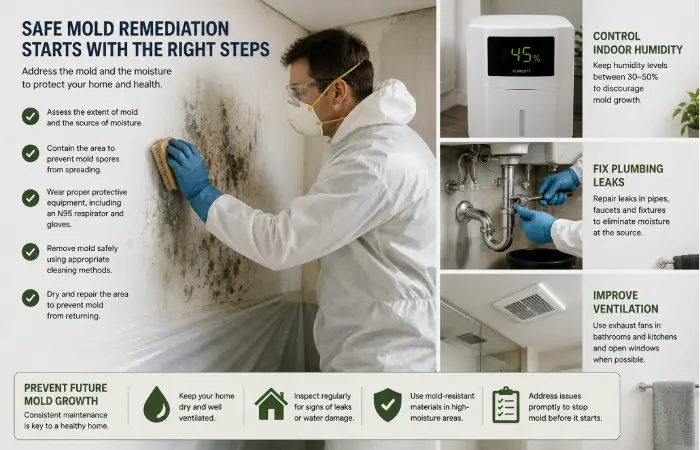
The CDC states that if you see or smell mold, you should remove it and correct the moisture problem.
Important steps include:
- Find and repair the water leak.
- Reduce excessive indoor humidity.
- Dry wet materials promptly.
- Remove mold from appropriate hard surfaces.
- Replace heavily contaminated porous materials when necessary.
- Avoid disturbing large areas of mold unnecessarily.
- Consider professional remediation for significant contamination.
- Keep vulnerable people away during cleanup.
The EPA recommends keeping indoor relative humidity below 60%, ideally between 30% and 50%, to help control moisture and mold growth.
How Can You Prevent Long-Term Exposure to Black Mold?
Prevention is mainly about controlling moisture.
Keep humidity under control
A dehumidifier or air conditioner can help maintain appropriate humidity.
Fix leaks quickly
Repair leaking:
- Pipes
- Roofs
- Windows
- Air-conditioning systems
- Bathroom fixtures
Dry wet materials
EPA guidance recommends drying water-damaged areas and materials within 24–48 hours when possible to help prevent mold growth.
Improve ventilation
Use exhaust fans in kitchens and bathrooms and ensure they vent appropriately.
Don’t ignore musty smells
A persistent musty smell can be a useful clue that moisture or hidden mold needs investigation.
Is Black Mold More Dangerous Than Other Mold?
Not necessarily.
The term “black mold” can make people think that all black-coloured mold is especially toxic. However, the CDC explains that mold comes in many colours and that colour does not necessarily indicate whether a mold is more or less dangerous.
Stachybotrys chartarum can produce mycotoxins under certain conditions, but the presence of this mold should not automatically be interpreted as proof that someone will develop a particular illness.
The practical priority is to address indoor moisture and mold growth.
When Should You See a doctor?
Make an appointment if you have persistent or recurring symptoms such as:
- Ongoing cough
- Repeated wheezing
- Persistent nasal symptoms
- Unexplained skin irritation
- Repeated asthma flare-ups
- Breathing difficulties
- Symptoms that repeatedly occur in a particular building
Tell the doctor about any known mold or dampness exposure.
Seek urgent medical care for serious breathing problems
Severe shortness of breath, significant difficulty breathing, chest pain, confusion, blue/grey lips or other severe symptoms should be treated as an emergency rather than assumed to be caused by mold.
People with weakened immune systems or significant chronic lung disease should take known mold exposure particularly seriously because they may have a higher risk of serious fungal infections.
Frequently Asked Questions
What are the first signs of black mold exposure?
Common early symptoms can include sneezing, nasal congestion, runny nose, coughing, wheezing, irritated eyes and skin irritation. These symptoms can also have many other causes.
Can black mold make you tired?
Fatigue is frequently reported by people who believe they have mold-related illness, but fatigue is not specific to mold exposure. Other medical conditions should be considered if fatigue persists.
Can black mold cause headaches?
Headaches can occur in people living or working in environments where mold and other indoor-air problems are present, but a headache by itself cannot establish mold as the cause. EPA notes that symptoms reported around damp buildings can have multiple potential causes.
How long does it take to recover from mold exposure?
There is no single recovery time. It depends on the underlying condition, severity of symptoms, individual sensitivity and whether continued exposure has been eliminated.
Can mold exposure cause breathing problems?
Yes. Mold can irritate the respiratory system, and mold exposure can worsen asthma in people who are sensitive to mold.
Should I get my house tested for black mold?
Routine mold testing is generally not necessary. CDC guidance says there are no health-based standards for acceptable indoor mold levels and does not recommend routine home mold testing. Visual inspection, moisture problems and musty odours can be more useful for identifying a mold problem.
Can I remove black mold myself?
Small areas may sometimes be cleaned safely, but people with asthma, significant respiratory disease, allergies or weakened immune systems should not participate in mold cleanup. Larger or extensive contamination may require professional remediation.
Final Thoughts
Long-term exposure to black mold symptoms can involve respiratory, allergic, eye and skin problems, particularly in people who are sensitive to mold or already have asthma or other respiratory conditions. However, symptoms such as fatigue, headaches or difficulty concentrating are not specific enough to diagnose mold exposure on their own.
The most evidence-based approach is straightforward: identify and eliminate the moisture problem, remove mold safely, avoid continued exposure and obtain medical evaluation for persistent symptoms. There is no proven detox drink or special diet that can simply “flush mold out” of your system.
If symptoms continue despite leaving the affected environment, speak with a healthcare professional to determine the actual cause and appropriate treatment.