
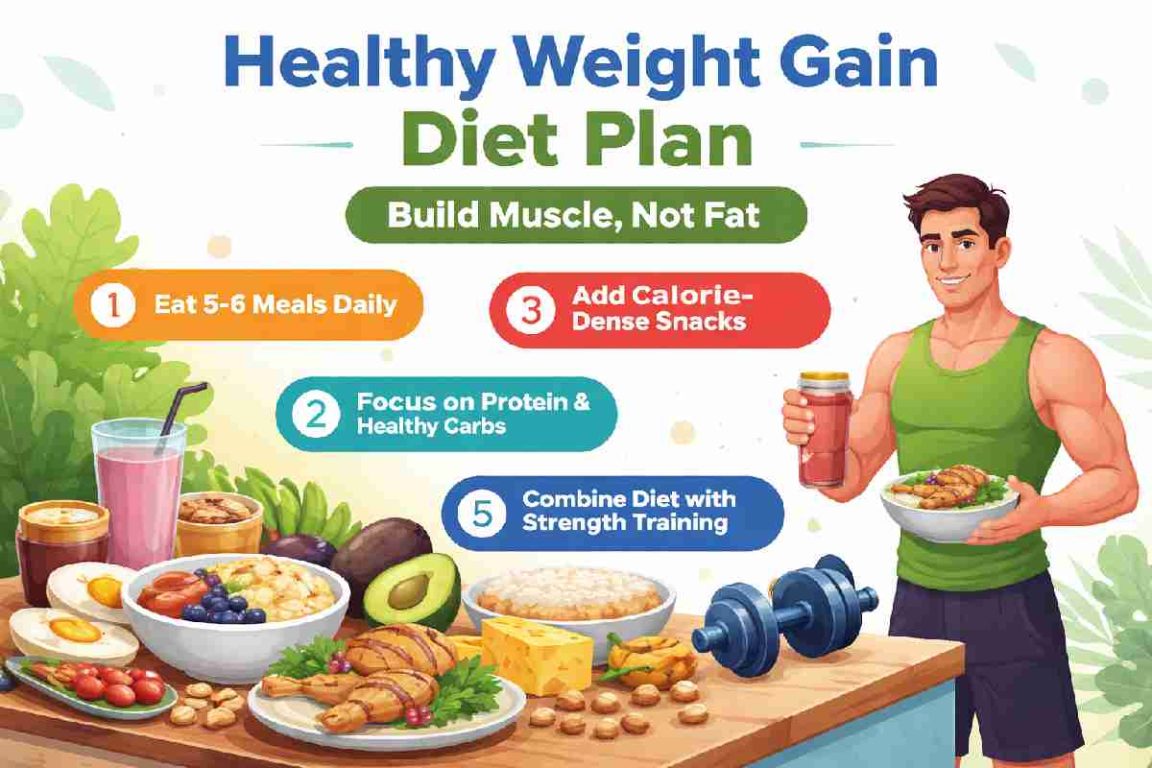
A healthy weight gain diet plan is not about overeating—it’s about structured calorie surplus, nutrient timing, and consistency to gain muscle without excess fat.
Most people trying to gain weight struggle not because they don’t eat enough—but because they don’t eat strategically. You might feel like you’re eating a lot, yet the scale doesn’t move. Or worse, you gain fat instead of muscle.
The solution? A planned, repeatable system that ensures you’re eating the right foods, in the right amounts, at the right time.
Key Takeaways
- Weight gain requires a consistent calorie surplus, not random overeating
- Focus on protein + calorie-dense whole foods, not junk
- Eat 5–6 meals daily for better absorption
- Strength training is essential for lean weight gain
- Avoid common mistakes like skipping meals or relying on junk food
Why Most People Fail to Gain Weight
Let’s be blunt: most people fail because they don’t track or structure their eating.
Common issues:
- “I eat a lot” (but actually don’t)
- Skipping meals unintentionally
- Eating low-calorie foods (like salads only)
- No consistency
Reality: Your body needs a daily surplus, not occasional overeating.
What a Healthy Weight Gain Diet Actually Means
There are two ways to gain weight:
| Type | Result | Problem |
|---|---|---|
| Dirty bulking | Fast weight gain | Mostly fat |
| Lean bulking | Slow, steady gain | More muscle |
Healthy weight gain = lean bulking
This means:
- Whole foods > junk food
- Protein-focused meals
- Controlled calorie surplus
Calorie & Macronutrient Framework
Step 1: Find Your Calorie Needs
- Maintenance calories + 300–500 kcal surplus
Step 2: Macronutrient Split
| Nutrient | Percentage | Role |
|---|---|---|
| Protein | 25–30% | Muscle growth |
| Carbs | 45–55% | Energy |
| Fats | 20–30% | Hormones & calories |
Example:
- Weight: 60 kg
- Calories: ~2200 + 400 = 2600 kcal/day
7-Day Healthy Weight Gain Diet Plan
Daily Meal Structure
| Meal | Example |
|---|---|
| Breakfast | Oats + milk + banana + peanut butter |
| Mid Snack | Nuts + smoothie |
| Lunch | Rice + chicken/dal + vegetables |
| Evening Snack | Sandwich + fruit |
| Dinner | Roti + paneer/chicken |
| Before Bed | Milk or protein shake |
Example Day Plan
Breakfast
- Oats with milk
- 2 boiled eggs / paneer
Snack
- Banana shake with peanut butter
Lunch
- Rice + dal + chicken / paneer
Snack
- Handful of almonds + fruit
Dinner
- Chapati + vegetables + protein
Before bed
- Glass of milk
Best Foods for Healthy Weight Gain
Proteins
- Eggs
- Chicken
- Paneer
- Lentils
Carbohydrates
- Rice
- Oats
- Potatoes
- Whole wheat
Healthy Fats
- Peanut butter
- Nuts
- Olive oil
Quick Calorie Boosters
- Smoothies
- Milkshakes
- Dry fruits
Foods to Avoid (Even When Gaining Weight)
Avoid:
- Junk food
- Sugary drinks
- Deep-fried snacks
Why?
- Leads to fat gain, not muscle
- Poor digestion
- Low nutrition
Common Mistakes That Stop Weight Gain
- Skipping meals
- Not tracking calories
- No protein intake
- No strength training
Biggest mistake: relying only on food without exercise.
Workout + Diet Combination
Diet alone = fat gain
Diet + workout = muscle gain
Focus on:
- Weight training (3–5 times/week)
- Compound exercises (squats, pushups)
According to organizations like WHO and Harvard Health Publishing, muscle growth requires both nutrition and resistance training.
Sample Weekly Progress Plan
| Week | Expected Gain |
|---|---|
| Week 1 | +0.3–0.5 kg |
| Week 2 | +0.5 kg |
| Month | 1–2 kg |
Adjust calories if:
- No gain → increase 200 kcal
- Too much fat → reduce slightly
Final Thoughts
Healthy weight gain is not about eating everything—it’s about eating smart, consistently, and with purpose.
If you follow a structured plan like this, you won’t just gain weight—you’ll build a stronger, healthier body.
FAQs
1. How many calories should I eat to gain weight?
You need a calorie surplus of 300–500 calories above maintenance. This ensures gradual, healthy weight gain without excess fat.
2. Can I gain weight without exercise?
Yes, but it will mostly be fat. For muscle gain, strength training is essential.
3. How long does it take to gain weight?
Healthy weight gain is slow. Expect around 1–2 kg per month.
4. Is junk food good for weight gain?
No. It may increase weight quickly, but leads to fat gain and poor health.
5. What is the best protein source for weight gain?
Eggs, chicken, paneer, and lentils are excellent options.
6. Can vegetarians gain weight easily?
Yes. Foods like paneer, lentils, nuts, and dairy provide enough calories and protein.
7. Should I eat before bed?
Yes. A small meal like milk or a protein shake helps overnight muscle recovery.