
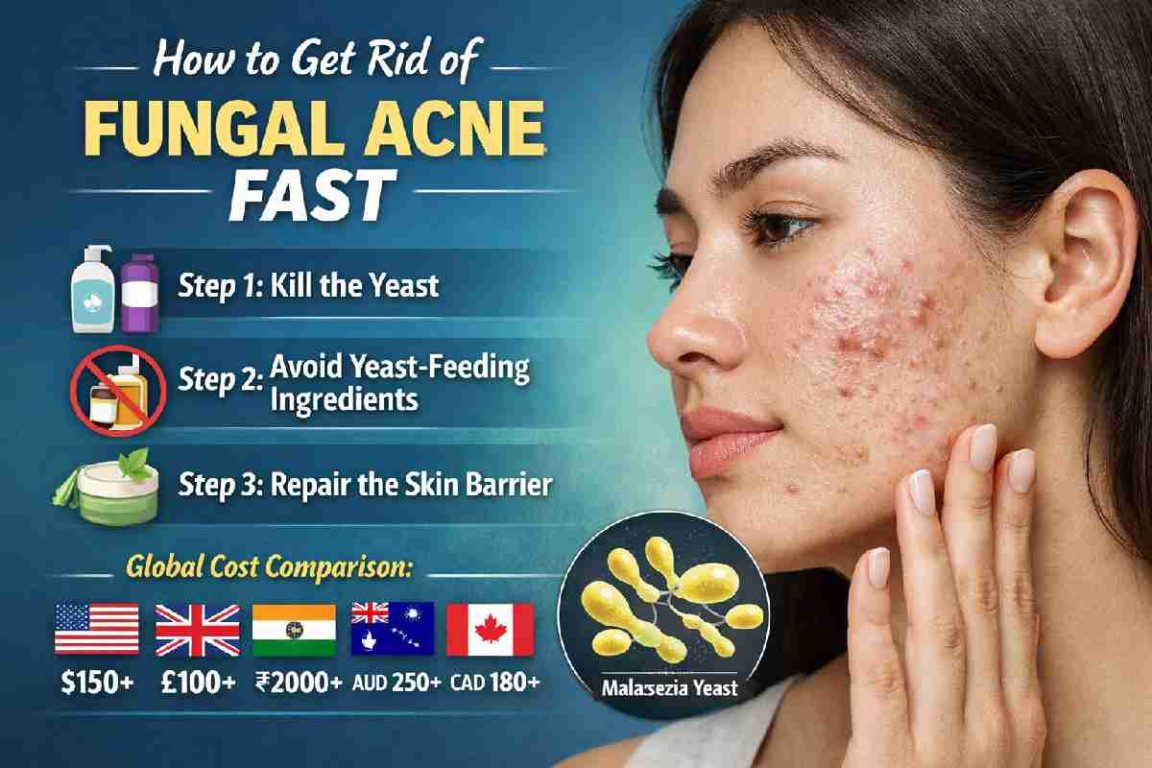
Fungal acne is not traditional acne—it is a yeast overgrowth called Malassezia folliculitis. The most effective treatment combines antifungal therapy, fungal-acne-safe skincare, and eliminating ingredients that feed yeast.
Many people struggle with stubborn breakouts that never improve with typical acne treatments. You might try salicylic acid, benzoyl peroxide, or expensive skincare routines—yet the tiny bumps remain. In many cases, the issue is not bacterial acne at all.
Instead, the real problem is fungal acne.
Unlike traditional acne caused by clogged pores, fungal acne develops when yeast living naturally on your skin grows out of control. Once you understand the cause, treating fungal acne becomes far easier.
Key Takeaways
-
Fungal acne results from yeast overgrowth, not clogged pores.
-
Regular acne treatments often worsen the condition.
-
Antifungal products like ketoconazole can quickly reduce symptoms.
-
Avoid ingredients that feed yeast, such as certain oils and fatty acids.
-
Most cases improve within 2–4 weeks with consistent treatment.
What Is Fungal Acne?
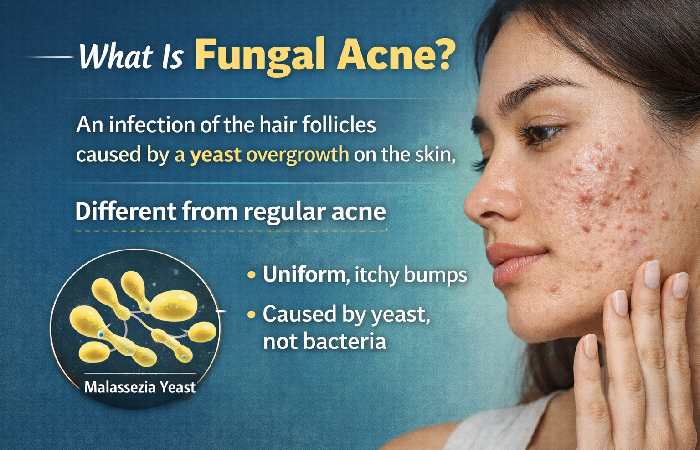
Fungal acne, medically called Malassezia folliculitis, is an infection of the hair follicles caused by yeast. This yeast normally lives on human skin without causing problems.
However, under certain conditions it can multiply rapidly.
Common triggers include:
-
Excess sweating
-
Hot and humid environments
-
Heavy skincare products
-
Long-term antibiotic use
-
Weakened immune system
Unlike regular acne, fungal acne typically appears as small, uniform bumps that may itch.
Dermatology organizations such as the American Academy of Dermatology and Mayo Clinic note that fungal acne often requires antifungal treatments rather than traditional acne medications.
Signs You May Have Fungal Acne
Recognizing fungal acne early helps prevent months of ineffective treatments.
Common symptoms include:
-
Small bumps of similar size
-
Persistent itching
-
Clusters on forehead, chest, or back
-
Acne that worsens with oily products
-
Breakouts after sweating or exercise
If your acne does not respond to common treatments like benzoyl peroxide, fungal acne could be the cause.
Why Fungal Acne Happens
The yeast responsible for fungal acne feeds on lipids and oils present on the skin.
Certain skincare ingredients can actually encourage yeast growth.
Examples include:
-
Coconut oil
-
Olive oil
-
Fatty acids
-
Esters
-
Polysorbates
In humid climates or after intense sweating, these ingredients create the perfect environment for yeast overgrowth.
Research published in journals such as the Journal of Clinical and Aesthetic Dermatology confirms that yeast thrives in oily environments.
The 3-Step Framework to Get Rid of Fungal Acne
Step 1: Kill the Yeast
The first step is eliminating the fungal overgrowth.
Common treatments include:
-
Ketoconazole shampoo used as a face wash
-
Zinc pyrithione cleansers
-
Selenium sulfide treatments
These ingredients directly target the yeast responsible for fungal acne.
Step 2: Stop Feeding the Yeast
The next step is avoiding ingredients that encourage fungal growth.
Avoid:
-
Heavy oils
-
Fatty acid esters
-
Thick occlusive creams
Instead choose lightweight, fungal-safe skincare products.
Step 3: Repair the Skin Barrier
Once the yeast is controlled, repairing the skin barrier prevents future breakouts.
Helpful ingredients include:
-
Niacinamide
-
Hyaluronic acid
-
Squalane
Maintaining balanced hydration helps keep the skin microbiome stable.
Best Antifungal Treatments
| Treatment | Type | Availability | Effectiveness |
|---|---|---|---|
| Ketoconazole shampoo | OTC | Pharmacies | Highly effective |
| Zinc pyrithione cleanser | OTC | Skincare stores | Moderate |
| Selenium sulfide lotion | OTC | Drugstores | Effective |
| Fluconazole tablets | Prescription | Dermatologist | Very strong |
Prescription medications are typically recommended for severe cases.
Dermatology Specialist Reviews and Global Pricing
| Country | Specialist Type | Typical Clinic Location | Average Consultation Price |
|---|---|---|---|
| United States | Board-Certified Dermatologist | Major cities | $120–$250 |
| United Kingdom | NHS or Private Dermatologist | London, Manchester | £80–£200 |
| India | Dermatologist | Mumbai, Delhi | ₹800–₹2500 |
| Australia | Skin Specialist | Sydney, Melbourne | AUD 120–300 |
| Canada | Dermatologist | Toronto, Vancouver | CAD 100–220 |
Prices vary based on clinic type and treatment complexity.
Popular Antifungal Skincare Brands
| Brand | Country | Product Type | Average Price |
|---|---|---|---|
| Nizoral | USA | Ketoconazole shampoo | $15 |
| La Roche-Posay | France | Dermatology skincare | $20–$40 |
| Sebamed | Germany | Sensitive skin cleanser | $15 |
| The Ordinary | Canada | Minimal skincare | $10 |
| Cetaphil | USA | Gentle skincare | $12 |
These brands are commonly recommended by dermatologists.
Yearly Treatment Cost Comparison
| Country | Avg Skincare Cost Per Year |
|---|---|
| USA | $200–$600 |
| UK | £150–£400 |
| India | ₹3000–₹12000 |
| Australia | AUD 250–700 |
| Canada | CAD 200–500 |
Costs depend on dermatologist visits and prescription medications.
Fungal Acne Safe Skincare Routine
Morning Routine
-
Gentle cleanser
-
Lightweight moisturizer
-
Oil-free sunscreen
Night Routine
-
Antifungal cleanser or treatment
-
Hydrating serum
-
Barrier repair moisturizer
Consistency is more important than expensive products.
Common Mistakes That Make Fungal Acne Worse
Many people unknowingly worsen fungal acne.
Avoid these mistakes:
-
Using heavy oils
-
Over-exfoliating skin
-
Using antibiotics unnecessarily
-
Ignoring humidity and sweat
Switching to fungal-safe skincare often resolves the issue.
When to See a Dermatologist
If symptoms persist after 3–4 weeks of antifungal treatment, professional help may be necessary.
Dermatologists may prescribe:
-
Oral antifungal medication
-
Medicated creams
-
Advanced skin diagnostics
Early treatment prevents long-term skin irritation.
Conclusion
Fungal acne can be frustrating, especially when traditional acne treatments fail to deliver results. The key difference is understanding that fungal acne is caused by yeast overgrowth rather than clogged pores.
By using antifungal treatments, eliminating yeast-feeding ingredients, and maintaining a balanced skincare routine, most people see significant improvement within a few weeks.
If symptoms persist, consulting a dermatologist ensures accurate diagnosis and targeted treatment.
FAQs
What kills fungal acne fastest?
Antifungal ingredients like ketoconazole, zinc pyrithione, and selenium sulfide work fastest. These treatments target the yeast responsible for fungal acne and usually improve symptoms within 2–3 weeks.
Can fungal acne go away on its own?
Sometimes mild cases improve naturally, but most fungal acne persists without antifungal treatment. Addressing the yeast imbalance speeds up recovery and prevents recurring breakouts.
Is fungal acne itchy?
Yes. Unlike typical acne, fungal acne often causes itching. This happens because yeast irritates hair follicles and triggers inflammation.
Can moisturizer cause fungal acne?
Certain moisturizers containing fatty acids or oils can worsen fungal acne. Choosing lightweight, oil-free formulas helps prevent yeast growth.
How long does fungal acne treatment take?
With proper antifungal treatment and skincare changes, most cases improve within two to four weeks. Severe cases may require prescription medication.
Is fungal acne contagious?
Fungal acne is not contagious. The yeast responsible naturally exists on human skin and becomes problematic only when it overgrows.
Can diet affect fungal acne?
Diet may indirectly influence fungal acne through sugar intake and inflammation, but skincare products and humidity play a larger role.
Should I stop using acne treatments if I have fungal acne?
Yes, many standard acne treatments like antibiotics can worsen fungal acne. Switching to antifungal treatments is usually more effective.