
High triglycerides are one of the most misunderstood blood markers in metabolic health and ow to Lower Triglycerides It. High triglycerides are one of the most misunderstood blood markers in metabolic health. Many people search for how to lower triglycerides after being told their cholesterol is “fine,” while triglycerides remain elevated—or worse, dismissed as a minor issue.
This guide explains what triglycerides really are, why they rise, and how to lower them effectively, using current scientific understanding — not recycled advice.
Key Takeaways
- Triglycerides reflect metabolic health, not just diet
- Sugar, insulin resistance, and alcohol are primary drivers
- Levels respond quickly to targeted lifestyle changes
- Persistent elevation deserves serious attention, even with normal cholesterol
What Are Triglycerides?
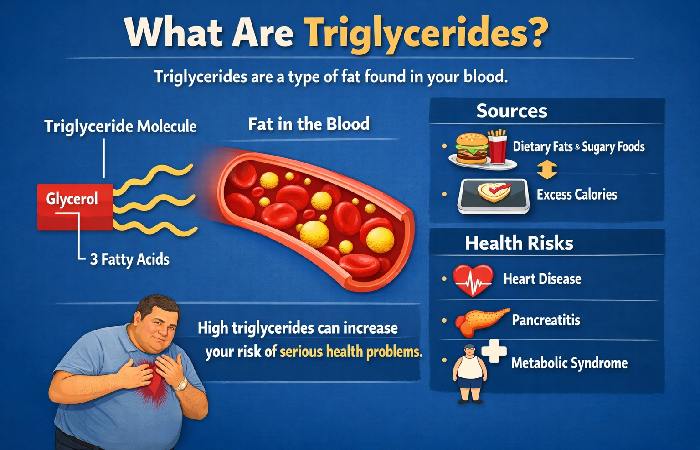
Its a form of fat (lipid) found in your blood. After you eat, your body converts excess calories — especially from carbohydrates, sugar, and alcohol — into triglycerides. These are stored in fat cells and released between meals for energy.
Triglycerides are not inherently harmful. They become a problem when production exceeds clearance, leading to chronically elevated blood levels.
What’s Considered a Healthy Triglyceride Level?
| Triglyceride Level (mg/dL) | Category |
|---|---|
| < 100 | Optimal |
| 100–149 | Normal |
| 150–199 | Borderline high |
| 200–499 | High |
| ≥ 500 | Very high (pancreatitis risk) |
Important: Many labs mark anything below 150 mg/dL as “normal,” but metabolic research shows risk begins rising well before that threshold, especially when combined with insulin resistance.
Triglycerides vs Cholesterol: Why They’re Not the Same
- It reflect how your body handles energy excess
- Cholesterol reflects cell structure, hormone production, and lipid transport
High triglycerides often indicate:
Insulin resistance
Excess carbohydrate or alcohol intake
Impaired fat metabolism
Someone can have normal cholesterol and dangerously high triglycerides — a common and overlooked scenario.
How Are Triglycerides Tested and Diagnosed?
Triglycerides are measured through a blood lipid panel, often ordered alongside cholesterol tests. While the test itself is simple, understanding how and when it’s done is essential for accurate results and proper diagnosis.
Fasting vs Non-Fasting Triglyceride Tests
Traditionally, It measured after a 9–12 hour fast, because triglyceride levels rise significantly after eating. Food — especially carbohydrates, sugar, and alcohol — can temporarily elevate triglycerides and distort results.
-
Fasting tests are preferred when:
-
Triglycerides are already elevated
-
Results are borderline or inconsistent
-
There is concern for pancreatitis or metabolic syndrome
-
-
Non-fasting tests may be acceptable for routine screening, but high readings should always be confirmed with a fasting test.
Why a Single High Result Isn’t Enough
Triglycerides are more variable than cholesterol. Levels can spike due to:
-
A high-carbohydrate or sugary meal the day before
-
Alcohol intake within the past 48–72 hours
-
Acute illness, infection, or inflammation
-
Poor sleep or severe stress
For this reason, doctors usually diagnose high triglycerides only after repeat testing, ideally under controlled fasting conditions.
Understanding Your Triglyceride Report
It result should never be interpreted in isolation. For meaningful insight, it must be reviewed alongside:
- HDL cholesterol
- LDL cholesterol
- Fasting blood glucose or HbA1c
- Body weight and waist circumference
A pattern of high triglycerides + low HDL is a strong indicator of insulin resistance, even if blood sugar appears normal.
Why High Triglycerides Matter More Than Most People Realize
Persistently elevated triglycerides are linked to:
- Atherosclerosis
- Small, dense LDL particles (more dangerous than standard LDL)
- Fatty liver disease
- Type 2 diabetes progression
- Acute pancreatitis (at very high levels)
It often the earliest warning sign of metabolic disease — appearing years before diabetes or heart disease is diagnosed.
What Actually Raises Triglycerides?
1. Excess Carbohydrates (Not Just Fat)
Refined carbs and sugars are rapidly converted into triglycerides via liver fat production.
2. Insulin Resistance
When insulin signaling is impaired:
- Fat breakdown increases
- Liver triglyceride production rises
- Clearance from blood slows
This explains why triglycerides are often high even in people who “eat healthy.”
3. Alcohol (Even Moderate Amounts)
Alcohol:
- Increases liver fat synthesis
- Blocks triglyceride clearance
- Raises levels for days after intake
4. Genetics
Some people inherit reduced ability to clear triglyceride-rich particles, making lifestyle changes alone insufficient.
How to Lower Triglycerides: What Actually Works
1. Reduce Sugar and Refined Carbohydrates (Highest Impact)
This is the single most effective intervention.
Evidence consistently shows triglycerides fall when:
- Added sugars are eliminated
- White flour products are reduced
- Ultra-processed foods are avoided
Why it works: Less substrate for liver triglyceride production.
2. Prioritize Weight Loss (Even 5–10%)
Modest fat loss improves:
- Insulin sensitivity
- Triglyceride clearance
- Liver fat metabolism
It often fall before major weight changes are visible.
3. Increase Physical Activity (Independent of Weight Loss)
Exercise:
- Enhances fat oxidation
- Improves insulin sensitivity
- Increases triglyceride breakdown
Both aerobic and resistance training are effective. Consistency matters more than intensity.
4. Eliminate or Strictly Limit Alcohol
For people with high triglycerides:
- Even “social drinking” can keep levels elevated
- Weekend drinking can distort fasting blood tests
Many people see dramatic improvement within 2–3 weeks of abstinence.
5. Adjust Fat Intake Strategically (Not Low-Fat by Default)
Contrary to old advice:
- Replacing carbs with healthy fats often lowers triglycerides
- Omega-3 fats are especially effective
Overconsumption of any calories, however, can still raise levels.
How Fast Do Triglycerides Drop?
| Timeframe | Expected Change |
|---|---|
| 48–72 hours | Reduction after stopping sugar/alcohol |
| 1–2 weeks | Noticeable drop with diet changes |
| 4–6 weeks | Significant improvement |
| 8–12 weeks | Stabilized lower baseline |
Triglycerides respond faster than cholesterol, making them a useful short-term feedback marker.
Supplements: What Helps and What Doesn’t
Effective (Evidence-Supported)
- Prescription omega-3 fatty acids
- Soluble fiber (psyllium)
- Weight-loss–associated interventions
Limited or Situational
- Niacin (effective but side effects limit use)
- Over-the-counter fish oil (dose and purity matter)
Ineffective Alone
- Antioxidant blends
- “Fat burner” supplements
- Detox products
- When Lifestyle Changes Aren’t Enough
Medication may be necessary when:
- It remain >500 mg/dL
- There is pancreatitis risk
- Genetic disorders are present
Medication treats risk, not root cause — lifestyle remains essential.
Triglycerides, Fatty Liver, and Metabolic Health
High triglycerides and fatty liver frequently coexist because both originate from:
- Excess liver fat production
- Insulin resistance
- Impaired fat export
Improving triglycerides often improves liver enzymes and imaging findings simultaneously.
Special Scenarios People Ask About
“I’m thin but my triglycerides are high”
Often due to:
- Genetics
- High sugar intake
- Undiagnosed insulin resistance
“My cholesterol is normal — should I worry?”
Yes. Triglycerides provide different risk information.
“They fluctuate a lot — is that normal?”
Yes. Triglycerides are sensitive to:
- Recent meals
- Alcohol
- Stress
- Illness
Frequently Asked Questions
What is the fastest way to lower triglycerides?
Eliminating sugar and alcohol produces the fastest results.
Do eggs raise triglycerides?
Eggs do not raise triglycerides in most people; excess refined carbohydrates do.
How long does it take to normalize triglycerides?
Most people see major improvement within 4–8 weeks.
Can triglycerides be too low?
Extremely low levels are uncommon and usually not harmful unless linked to malnutrition.